Saline: How Saint Barthélemy's Most Hauntingly Beautiful Beach Became the Caribbean's Last Truly Wild Luxury Shoreline
April 3, 2026 · 15 min read
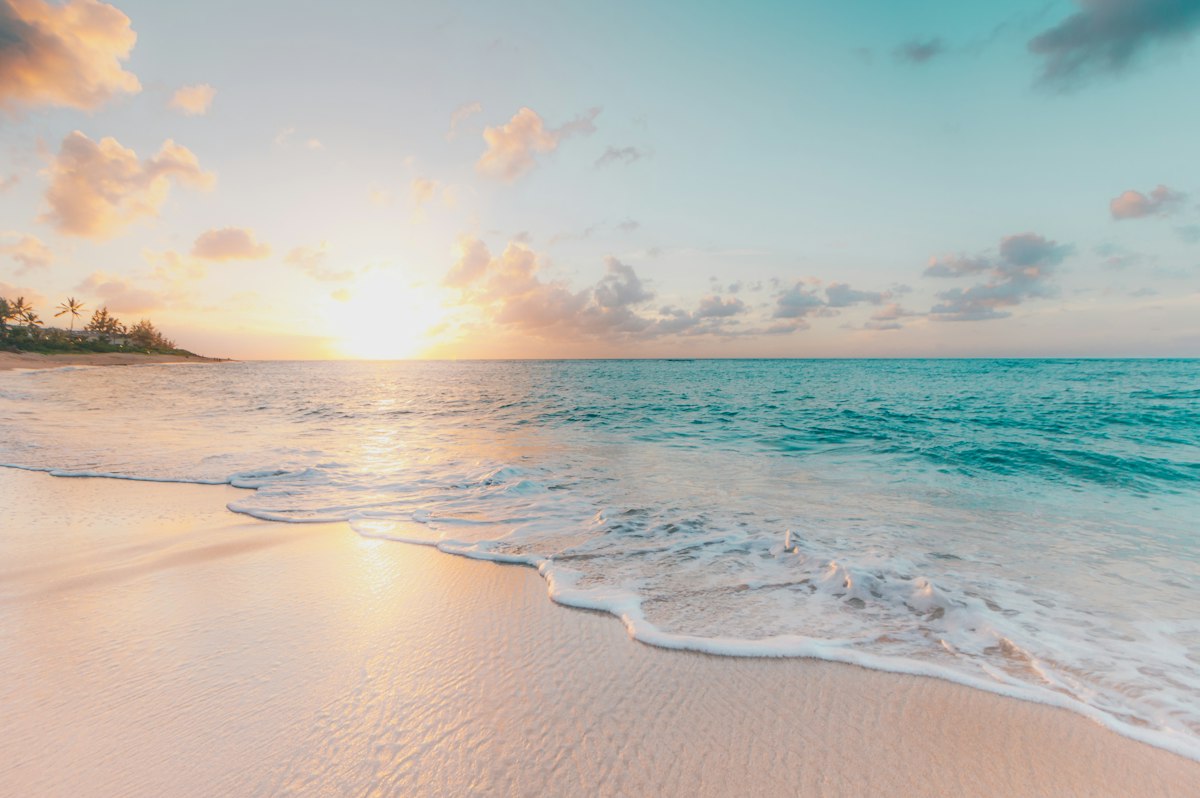
To reach Saline, you walk. This is not a metaphor for spiritual preparation or a marketing conceit designed to manufacture exclusivity. It is a simple logistical fact: there is no road to the beach, no parking lot at its edge, no golf-cart shuttle operated by a nearby hotel. You leave your vehicle at the end of a narrow road that terminates in a small, unpaved clearing, and you walk approximately ten minutes along a path that winds through scrubby vegetation, past the ruins of an eighteenth-century salt pond, over a low hill, and then — with the sudden dramatic reveal that only Caribbean topography can deliver — the beach appears below you: a 200-metre crescent of fine white sand facing the open Atlantic, framed by rocky headlands, backed by dunes that rise gently into a landscape of sea grape and manchineel trees, and empty. Almost always, radiantly, defiantly empty.
The Salt That Names It
Saline takes its name from the salt pond that sits behind the beach — a shallow, seasonally variable body of water that was, for approximately two centuries, one of Saint Barthélemy's primary economic assets. Salt harvesting in the Caribbean predates European colonisation, but it was the French settlers of the seventeenth century who systematised the process at Saline, creating evaporation ponds that exploited the area's low rainfall, high winds, and intense solar radiation to produce sea salt of commercial quality. The trade was modest — Saint Barth was never a salt-producing powerhouse to rival Turks and Caicos or Bonaire — but it sustained a small community of salt workers whose descendants still own property along the road that leads to the beach.
The pond today is a Ramsar-recognised wetland habitat, home to seasonal populations of great blue herons, brown pelicans, and, during the winter migration, small flocks of flamingos that pause here on their journey between South American breeding grounds and Caribbean feeding territories. The salt crust that forms on the pond's surface during the dry season creates a blindingly white expanse that reflects light with an intensity that makes the surrounding vegetation appear almost fluorescently green — a visual effect that photographers find irresistible and that lends the approach to Saline a quality of chromatic intensity that prepares the eye for the beach ahead.
The Architecture of Absence
What makes Saline exceptional among Caribbean beaches is not what is there but what is not. There are no beach bars. No sunbed concessions. No watersports operators. No beach clubs playing electronic music at volumes that transform sand into a dance floor. No signs, no lifeguards, no changing facilities, no showers, no bins, no infrastructure of any kind. The beach exists in a state of managed wilderness — maintained by the Territorial Collectivity of Saint Barthélemy, which dispatches cleaning crews and environmental monitors but has resisted, with a consistency that borders on ideology, all proposals to develop the site commercially.
This absence is not an oversight; it is a policy decision with significant economic implications. The land surrounding Saline is zoned as a natural area under Saint Barth's Plan Local d'Urbanisme, a classification that prohibits construction within a defined buffer zone of the beach and salt pond. The zoning was established in 2007, shortly after the island transitioned from a commune of Guadeloupe to an Overseas Collectivity of France, and it has been maintained through successive administrations despite periodic pressure from developers who see in Saline's beauty an opportunity for the kind of high-end beach club that has transformed shorelines from Mykonos to Tulum.
The Real Estate Perimeter
If Saline's beach itself is un-developable, the surrounding hillsides are not — at least, not entirely. A small number of villas, built before the most restrictive zoning provisions took effect, occupy elevated positions on the hills that frame the beach, enjoying views that encompass the entire crescent of sand, the salt pond, and the open Atlantic stretching unbroken toward Africa. These properties — there are fewer than a dozen with genuine Saline views — constitute one of the most tightly constrained luxury real estate micro-markets in the Caribbean.
A four-bedroom villa with direct Saline views traded in early 2026 for €11.2 million — a price that works out to approximately €4,800 per square foot of interior space, a figure that exceeds comparable properties in Gustavia or Saint-Jean and reflects the premium that the market assigns to viewshed permanence. The buyer — a European technology executive who had previously rented the property for three consecutive Christmas seasons at €45,000 per week — purchased not just a house but a guarantee: the view from Saline's hillside will never change, because the institutional and legal frameworks that protect the beach are essentially irreversible.
The Atlantic Character
Saline faces the open Atlantic, and the ocean here has a character fundamentally different from the sheltered Caribbean coast that defines most of Saint Barth's beach experience. The waves at Saline are larger, the currents stronger, the water temperature marginally cooler — conditions that produce a swimming experience that is exhilarating rather than soporific, challenging rather than passive. On days when the Atlantic trade winds build, the surf at Saline can reach two metres — significant enough to attract a small but dedicated bodyboarding community and large enough to make casual swimming a moderately athletic undertaking.
This Atlantic exposure creates a sensory environment that is markedly different from the lagoon-like calm of Grand Cul-de-Sac or the protected waters of Shell Beach. The sound is different: a constant, bass-heavy roar that functions as natural white noise, erasing conversation and creating an envelope of acoustic privacy that no architectural design could replicate. The light is different: the spray from breaking waves creates a permanent haze at the waterline that scatters sunlight into the kind of diffused, golden luminosity that makes skin glow and photographs develop a quality of soft-focus romanticism that no filter can adequately imitate.
The Manchineel Question
The trees that line the back of Saline beach include several specimens of Hippomane mancinella — the manchineel, one of the most toxic trees in the world. Every part of the manchineel is dangerous: the sap causes severe chemical burns on contact with skin; the small, apple-like fruits are potentially lethal if ingested; even standing beneath the tree during rain can cause blistering, as water droplets carry sap onto exposed skin. The Territorial Collectivity marks the trees with red paint, and informational signs at the beach entrance warn visitors in French and English, but the manchineels remain in place — they are a protected species under French environmental law, and their presence at Saline is considered part of the beach's ecological character.
The manchineels add to Saline's atmosphere of authentic, untamed nature — a quality that distinguishes it from the curated, sanitised beach experiences offered by Saint Barth's luxury hotels. At Saline, nature has not been domesticated for visitor comfort. The sea is rough when it chooses to be rough. The trees are toxic. The sand, in the absence of mechanical grooming, varies in texture from powder-fine near the waterline to coarse and shell-mixed at the dune crest. These are not deficiencies; they are the characteristics of a landscape that has retained its essential wildness, and for the growing segment of luxury travellers who define premium not by thread count but by authenticity, they are precisely the point.
The Sunset Protocol
Saline's orientation — facing west-northwest — makes it one of the few beaches on Saint Barthélemy from which the sunset is visible directly over water. This astronomical fact has cultural consequences. In the late afternoon, beginning around 4:30 PM during the winter months, a quiet migration begins: visitors who have spent the day at other beaches, guests from hotels in Gustavia and Saint-Jean, villa renters who have learned from their concierge or from previous visits that Saline at sunset is one of the Caribbean's great free spectacles. They walk in carrying nothing — no chairs, no coolers, no speakers — and they sit on the sand in a loose arrangement that feels spontaneous but follows an unwritten protocol: sufficient space between groups to preserve the illusion of solitude, voices lowered as the sun approaches the horizon, phones eventually pocketed as the sky transitions through its nightly programme of coral, amber, violet, and indigo.
It is, in its simplicity, one of the most luxurious experiences available on an island where a single night in a top-tier hotel can exceed €5,000. No reservation is required. No dress code applies. No bill arrives. The sunset at Saline costs nothing and offers everything that the luxury industry spends billions trying to manufacture: beauty, silence, impermanence, and the fleeting awareness that some things cannot be bought, only witnessed.
Published by Saint Barth Latitudes · Part of the Latitudes Media network