Public Beach: How Saint Barth's Most Paradoxically Named Shoreline Became the Caribbean's Definitive Stage for Social Luxury
March 23, 2026 · 12 min read
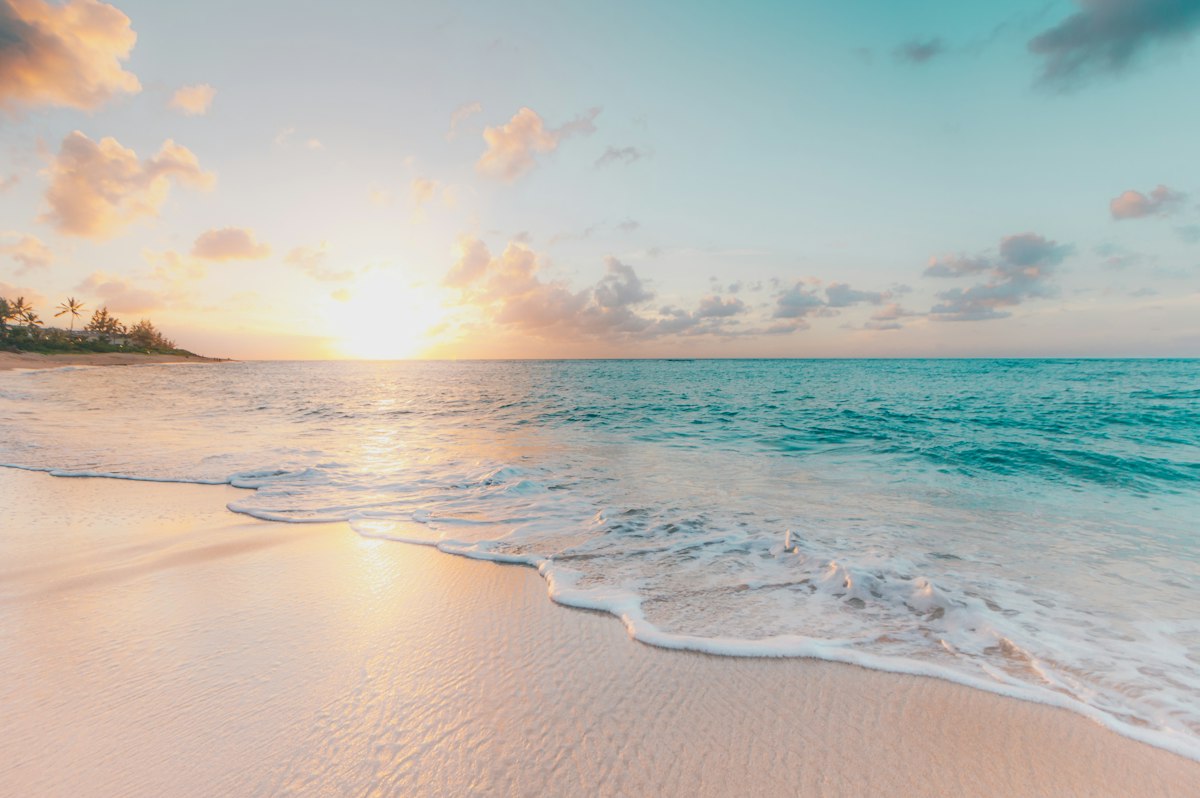
The name is the first paradox. In an island where every grain of sand is technically public — French law guaranteeing universal access to the coastline up to the high-water mark — the beach that calls itself "Public" is, in social terms, among the most selectively curated stretches of shoreline in the Western Hemisphere. Located on the narrow isthmus connecting Gustavia harbour to the gentle crescent of St. Jean, this 200-metre ribbon of white sand has become the Caribbean's most condensed theatre of barefoot luxury: a place where the line between exclusivity and openness, between performance and relaxation, between wealth displayed and wealth concealed, is redrawn daily by the simple act of choosing where to lay a towel.
The Geography of Glamour
Public Beach — sometimes rendered as "Shell Beach" in older guidebooks, though the locals insist on the distinction — occupies a site of unusual geographic drama. To the west, the rooftops of Gustavia cascade toward the harbour; to the east, the runway of Gustaf III Airport brings arriving aircraft so close overhead that passengers can read the brand names on the beach towels below. The beach faces north onto the narrow strait between Saint Barth and Saint Martin, its waters sheltered from the Atlantic swell by the island's volcanic spine and warmed by currents that maintain a temperature range between 26 and 29 degrees Celsius year-round.
The sand itself — fine-grained, bone-white, maintained to a standard that would satisfy the greenkeeper of a championship golf course — slopes gently into turquoise shallows that remain wadeable for thirty metres before the seabed drops away. There is no reef here, no sea grass, no rock: just the uninterrupted perfection of sand meeting water meeting sky, the essential Caribbean proposition stripped to its irreducible minimum.
The Social Archaeology
Public Beach's transformation from unremarkable strand to social institution tracks precisely with Saint Barth's own evolution from forgotten Antillean outpost to ultra-luxury destination. In the 1960s, when David Rockefeller acquired his first parcels on the island, the isthmus was little more than a sandy connecting road between Gustavia and the village of St. Jean. The beach was used by fishermen launching pirogues and by children escaping school. The idea that adults might choose to spend their afternoon there — equipped with champagne, sunscreen and a studied air of insouciance — would have seemed bewildering.
The catalysts of change were the beach bars. First came a modest shack offering grilled fish and cold Carib beer; then, through the 1990s and 2000s, a succession of increasingly polished establishments that understood their product was not food or drink but atmosphere: the permission to be simultaneously glamorous and relaxed, overdressed and underdressed, visible and anonymous. Today's beach bars — their names rotate with the seasons, their aesthetics shifting between Ibiza-minimal and tropical-baroque — are masterworks of environmental design, deploying driftwood, linen, ambient music and impeccably calibrated cocktail lists to create micro-environments where a hedge fund manager and a fashion photographer can share a banquette without either feeling out of place.
The Economics of Sand
The economics are extraordinary. A sunbed and umbrella at one of Public Beach's prime establishments costs between €80 and €150 per day — a figure that sounds extravagant until one considers that the equivalent facility at a Mykonos beach club can reach €300, and that Saint Barth's beach bars operate without the velvet ropes, door policies and minimum-spend requirements that have made the Mediterranean beach club experience increasingly transactional. At Public Beach, the transaction is implicit: you pay for the lounger, you order at your pace, and the understanding is that you will spend the day — not a "session" bounded by the next reservation.
The real estate economics that surround the beach are even more revealing. Properties with a sightline to Public Beach — rare, given the density of the isthmus — command premiums of 30 to 40 per cent over comparable villas in less socially charged locations. A recent sale on the hillside above the eastern end of the beach closed at €14 million for a three-bedroom villa whose principal asset, beyond the expected pool and garden, was an unobstructed view of the sand below. The buyer, a European fashion executive, was quoted as saying that the view alone was worth the premium: "It is like owning a painting that changes every hour."
The Codes of Conduct
What makes Public Beach unique — and uniquely Saint Barth — is the invisible code of behaviour that governs its daily life. There is no dress code, yet everyone is dressed. The prevalent aesthetic might be described as "expensive nonchalance": linen cover-ups from Eres or Loro Piana, sunglasses that cost more than a return flight from Paris, jewellery that is real but understated. The men tend toward solid-colour swim shorts in muted tones — navy, olive, sand — that signal membership in a class that has moved beyond logos. The women, more varied, nonetheless converge on a register of effortful ease: the swimsuit that looks simple but isn't, the straw hat that was handmade in Madagascar, the book (always a physical book, never a Kindle) that is challenging enough to project seriousness but not so demanding that it interferes with people-watching.
Photography is the most revealing of the beach's unwritten rules. Selfies are acceptable; photographing others without permission is not. The understanding is that Public Beach is a space where privacy and visibility coexist — where being seen is part of the pleasure, but being documented is a violation. This distinction, which might seem semantic elsewhere, is fundamental to the beach's social contract: you come to Public Beach to participate in a shared performance of leisure, not to capture evidence of other people's participation.
The Sunset Protocol
The beach's daily rhythm reaches its climax at sunset. Between 5:30 and 6:30 PM, depending on the season, the population doubles as villa guests, hotel visitors and yacht crews converge for what has become the island's most reliable social gathering. The music — which has been building gradually since early afternoon through a progression from bossa nova through deep house to something more percussive — reaches a volume that invites movement without demanding it. Champagne replaces rosé. The light turns amber, then gold, then a deep apricot that makes everyone look ten years younger and infinitely more interesting.
It is at this hour that Public Beach most closely resembles a living room — the island's largest and most democratic living room, where the social hierarchies that structure the rest of Saint Barth's day are temporarily suspended in favour of a shared experience so elemental that it transcends wealth: the spectacle of the sun dropping into the Caribbean Sea, viewed from a stretch of sand that has somehow, against all probability, become one of the most coveted addresses in the luxury world.