Nikki Beach Saint Barth: How the Caribbean's Most Selective Beach Club Became the Definitive Intersection of Coastal Hedonism and Ultra-Luxury Curation
March 22, 2026 · 10 min read
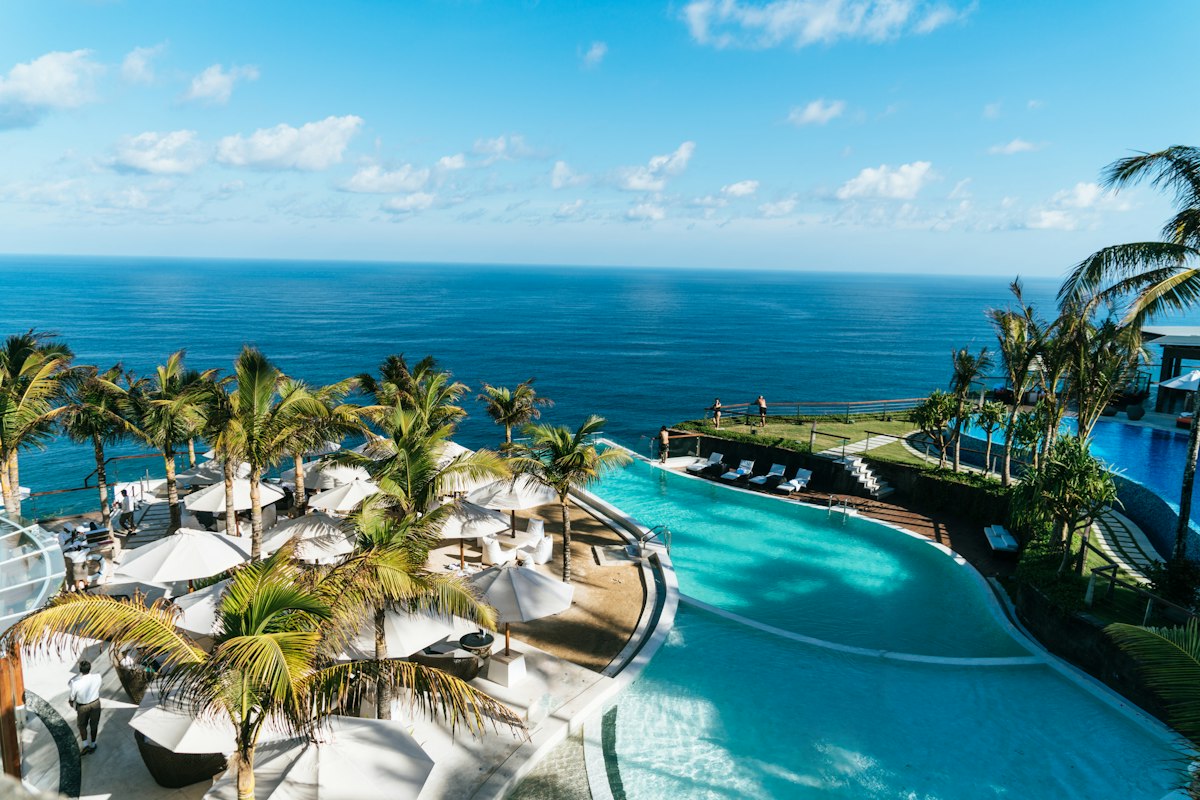
The concept of the beach club, as it exists in the collective imagination of the global luxury consumer, is essentially Mediterranean — a Riviera invention of the 1920s that found its fullest expression on the shores between Cannes and Saint-Tropez. White canvas, rosé by the magnum, a carefully calibrated ratio of display to discretion. When Nikki Beach opened its Saint Barthélemy outpost on the western curve of Saint-Jean Bay, it did not import this formula wholesale. It adapted it — filtering the Mediterranean beach club archetype through the specific social physics of an island where the global one percent converges for six weeks each winter in a density unmatched anywhere else on earth.
The result is something that transcends the category of hospitality venue. Nikki Beach Saint Barth is, simultaneously, a restaurant, a social exchange, a style laboratory, and a real-time index of where cultural and financial capital intersect at any given moment during the Caribbean season. Understanding what it is requires understanding what it is not: it is not a nightclub (it closes at sunset), not a members' club (there is no membership), and not exclusive in the crude sense of the velvet rope. Its selectivity operates through mechanisms far more sophisticated — through pricing, through social calibration, through the unspoken understanding that the Saint Barth iteration of Nikki Beach functions according to rules that are learned rather than enforced.
The Geography of Visibility
Saint-Jean Bay is divided, physically and socially, by the short runway of Gustaf III Airport. The eastern portion — the beach adjacent to Eden Rock — is the island's most photographed strand, a crescent of white sand where incoming turboprops descend to a landing altitude that passes directly over sunbathers' heads. It is theatrical, public, democratic. The western portion, where Nikki Beach occupies its beachfront position, is quieter by geography: the runway's mass creates a visual and acoustic barrier that produces, on the western side, a beach that feels sequestered without being remote.
This geography is essential to the venue's social mechanics. Nikki Beach is visible from the beach — visible enough that its white daybeds and flag-topped canopies function as a landmark, a destination point for the casual walker — but its interior operates on a different register. The transition from public beach to Nikki Beach territory is unmarked by any physical boundary. There is no gate, no rope, no bouncer in black. The boundary is economic: the daybed that costs €500 for the afternoon, the bottle of Whispering Angel that arrives at €120, the lobster spaghetti at €65. The currency of admission is not status but expenditure, and the genius of the model is that expenditure, on Saint Barth, is itself a form of social performance that attracts precisely the clientele the venue desires.
The Sunday Ritual
Every social institution requires a defining ritual, and Nikki Beach's is the Sunday afternoon session. From approximately 1pm to 6pm each Sunday during the season — roughly mid-December through late March — the venue transforms from a beach restaurant into something that more closely resembles a choreographed social event. The DJ, positioned on a raised platform behind the bar, controls the energy curve with a precision that reflects years of institutional memory: deep house at lunch, building through vocal house and disco edits as the afternoon progresses, peaking around 4pm with tracks that trigger the standing-on-daybeds, champagne-spraying behaviour that has become the venue's signature visual.
The Sunday clientele is a specific subset of Saint Barth's winter population. The families with young children are at Flamands. The privacy absolutists are at Colombier. The cultural tourists are lunching in Gustavia. Nikki Beach on Sunday attracts those for whom visibility is not a liability but an asset — the entrepreneurs, entertainers, athletes, influencers, and inheritors who constitute the performative wing of the ultra-wealthy. They arrive in convoy from villas in Lurin and Pointe Milou, wearing swimwear that costs more than most people's formalwear, and they spend the afternoon in a social dance that is simultaneously spontaneous and entirely codified.
The Culinary Architecture
The persistent criticism of beach clubs — that the food is an afterthought, a vehicle for markups rather than a culinary proposition — does not survive contact with Nikki Beach Saint Barth's kitchen. The menu reflects an understanding that the venue's clientele eats, on other evenings, at Maya's, at Bonito, at L'Isola. The standard must correspond. The kitchen produces a pan-Asian-Mediterranean fusion that is calibrated for the beach context: clean flavours, generous portions, presentations that photograph well in natural light. The tuna tataki, the lobster linguine, the truffle pizza that has become an unlikely signature — these are dishes designed to be consumed with salt on the skin and sand between the toes, but executed with a technical precision that would not embarrass a serious restaurant.
The beverage programme operates on a logic of theatrical abundance. Champagne — specifically, Veuve Clicquot in magnums and jeroboams — is the venue's core product, both commercially and symbolically. The arrival of a large-format bottle at a table is accompanied by sparklers, by music cues, by the attention of the entire venue. It is conspicuous consumption in its most literal sense, and the venue has refined the choreography to the point where each bottle delivery functions as a micro-event that enhances rather than interrupts the afternoon's flow.
The Economic Engine
Nikki Beach Saint Barth operates on a seasonal calendar that compresses its revenue into approximately 100 trading days. The economics of this compression are extraordinary. A single Sunday during peak season — Christmas week or New Year's — can generate revenue that a comparable mainland restaurant would take a month to achieve. The daybed reservations for New Year's Day sell out months in advance, at prices that start at €1,000 and escalate into five figures for the premium positions.
This economic intensity has implications beyond the venue itself. Nikki Beach functions as an anchor institution for the western end of Saint-Jean, attracting a daytime population that supports the boutiques, car rental agencies, and villa rental offices in the surrounding area. The venue's brand — recognised globally through its outposts in Miami, Ibiza, Monaco, Dubai, and Mykonos — delivers a marketing value to Saint Barth that exceeds any tourism board campaign. When someone posts a photograph from Nikki Beach Saint Barth, they are advertising not just the venue but the island, the lifestyle, the aspiration.
The Paradox of Accessible Exclusivity
What makes Nikki Beach Saint Barth singular — and what separates it from its own outposts in other destinations — is the concentration of its clientele. In Miami or Ibiza, the ultra-wealthy are diluted within a larger population of aspirational visitors. On Saint Barth, the island itself functions as a filter. The expense of reaching the island, of securing accommodation, of eating and drinking at island prices — these barriers ensure that the Nikki Beach Sunday crowd is composed almost entirely of people who, in any other context, would be the most notable presence in the room. Here, they are the room. A hedge fund manager sits next to a Grammy winner. A tech founder shares a daybed section with a fashion house creative director. The social density is so extreme that the conventional hierarchies of celebrity and wealth cease to function; everyone is, by the standards of the outside world, extraordinary, and this mutual recognition creates an atmosphere of relaxed intensity that cannot be manufactured.
This is the paradox that Nikki Beach has resolved more successfully than any comparable venue: how to create exclusivity without exclusion, selectivity without snobbery, a social hierarchy without visible gatekeeping. The answer, refined over two decades on Saint-Jean Bay, is to let the island do the selecting and the venue do the hosting. The result is a beach club that functions, for its brief annual season, as the living room of a community that exists nowhere else — a community defined not by geography or nationality but by the shared understanding that there is no better place to spend a Sunday afternoon than on a white daybed, with the Caribbean at your feet and the low hum of a turboprop descending over the palm trees toward the runway next door.
Published by Latitudes Media · More from Saint Barth Latitudes →