Arrival as Architecture: How Saint Barthélemy's Private Helicopter and Yacht Charter Culture Became the Caribbean's Most Ritualistically Refined Luxury Transfer Experience
April 4, 2026 · 11 min read
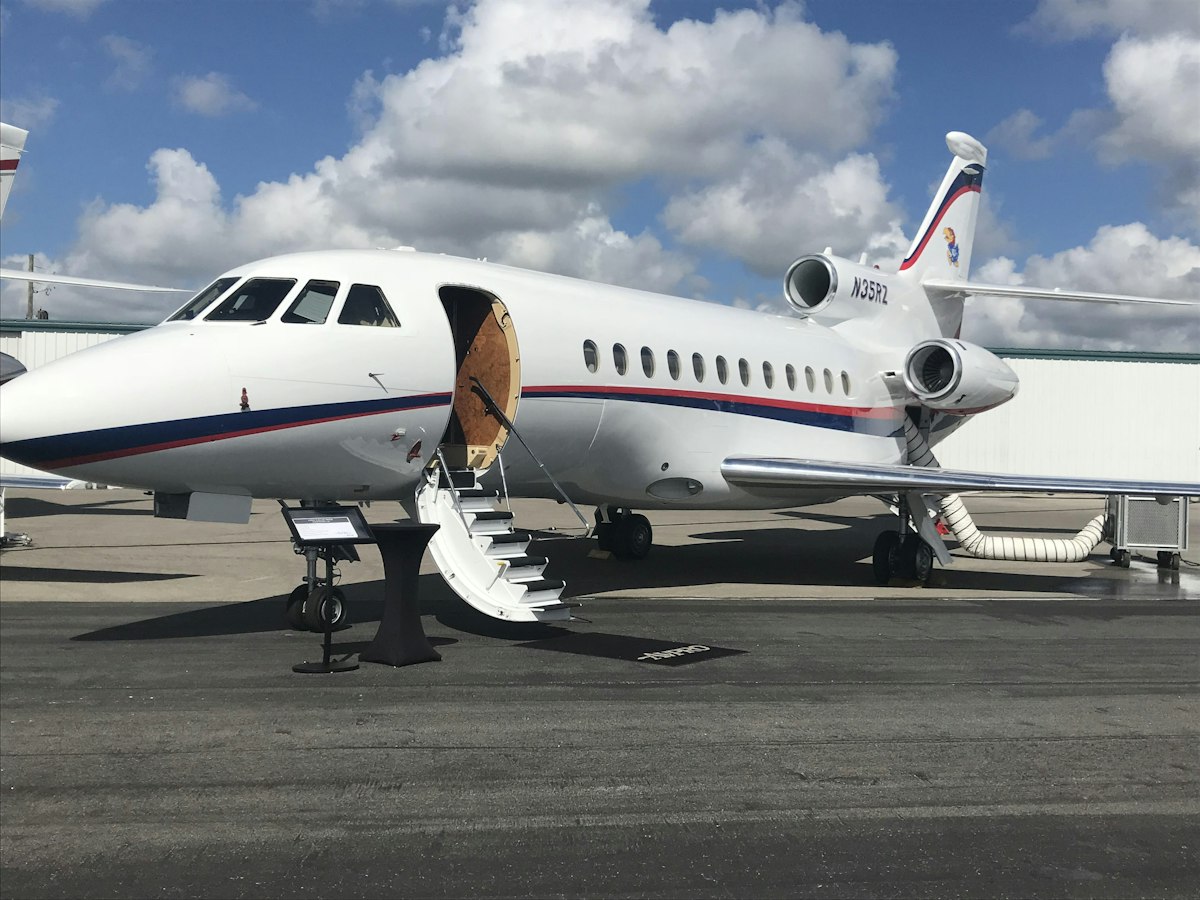
Most luxury destinations are defined by what happens after arrival. Saint Barthélemy is defined by the arrival itself. The island's 650-metre runway at Gustaf III Airport — one of the shortest commercial strips in the world — descends over a steep hillside before terminating metres from the beach at Saint-Jean, a landing sequence so dramatic that it has generated its own genre of aviation footage and a dedicated community of plane-spotters who film approaches from the hillside above. No wide-body aircraft can land here. No direct intercontinental flight is possible. Every visitor to Saint-Barth must first reach a neighbouring island — Sint Maarten, Guadeloupe, San Juan — and then complete the final transit by small aircraft, helicopter, or boat. This logistical constraint, which might have doomed a lesser destination, has instead created the Caribbean's most sophisticated transfer culture: an ecosystem of private aviation, helicopter charter, and yacht-tender services that transforms the last thirty minutes of the journey into a ritual of anticipation, exclusivity, and aerial beauty.
The Helicopter Transfer: Twelve Minutes of Revelation
The helicopter transfer from Sint Maarten's Princess Juliana International Airport to Saint-Barth takes approximately twelve minutes — a duration that is simultaneously too short to qualify as transport and too extraordinary to classify as mere transit. The route crosses the lagoon of Simpson Bay, passes over the Dutch-French border (invisible except on maps), skirts the volcanic ridges of Saint-Martin's interior, and then, as the aircraft crosses the channel, presents Saint-Barth in its entirety: a green mountainous island fringed with white beaches, its harbour dotted with superyachts, its hillsides punctuated with the white geometries of contemporary villas. The visual impact is architectural — the island presented not as a destination approached incrementally by road but as a complete composition revealed instantaneously from altitude. Companies such as Caribbean Helicopters and Héli Saint-Barth operate this route with machines ranging from the Airbus H125 (four passengers, panoramic windows) to the larger H130 (six passengers, air-conditioned cabin), with pricing that reflects not merely the fuel cost but the experiential premium: approximately €600 to €1,200 per flight, depending on aircraft type and time of booking.
The Small-Aircraft Approach: Aviation as Performance
For those who arrive by fixed-wing aircraft — the majority of visitors, via carriers such as WinAir, Tradewind Aviation, and St Barth Commuter — the approach to Gustaf III is an experience that no amount of luxury resort design can replicate. The aircraft, typically a Twin Otter, BN-2 Islander, or Pilatus PC-12, descends toward the island from the north, passing over the rocky promontory of Col de la Tourmente before pitching steeply downward toward the runway. The hillside drops away; the beach appears; the wheels touch tarmac that ends at a road where cars must stop for landing aircraft. Passengers emerge directly onto an apron that is less airport terminal than village square — a single-story building where immigration is processed with a brevity that reflects the island's understanding that formality is inversely proportional to genuine exclusivity. The entire experience, from touchdown to taxi, takes under ten minutes. There are no baggage carousels, no transfer buses, no corridor walks. The airport is, in effect, a door — you step through it and you are on Saint-Barth.
The Yacht Tender: Arriving by Sea
The third mode of arrival — by yacht — is the one that most precisely encodes Saint-Barth's social hierarchy. During peak season (December through April), Gustavia's harbour hosts a rotating fleet of superyachts whose collective value frequently exceeds the GDP of small nations. For their owners and guests, arrival on Saint-Barth is not a transfer but a tender operation: a short boat ride from the yacht's anchorage to the harbour wall, executed by uniformed crew in a vessel whose design and maintenance reflect the standards of the mother ship. The harbour's configuration — a natural U-shaped inlet surrounded by red-roofed Swedish colonial buildings — means that this arrival takes place within an amphitheatre of architectural beauty, observed by diners at the quayside restaurants and fellow yacht owners assessing the fleet from their own decks. The tender ride from anchorage to dock takes perhaps five minutes, but it is those five minutes that most clearly articulate Saint-Barth's distinctive luxury proposition: that arrival is not a logistical problem to be solved but an aesthetic experience to be choreographed.
The Charter Ecosystem
Saint-Barth's transfer culture has generated an entire ecosystem of charter and concierge services that operate at a level of refinement unmatched in the Caribbean. Companies such as St Barth Jet, Caribbean Helicopters, and JetBlue's semi-private Gateway Select service from San Juan have developed products specifically calibrated to the island's arrival infrastructure. Private jet travellers typically fly to Sint Maarten — whose 2,300-metre runway accommodates aircraft up to the Gulfstream G650 — and then transfer via helicopter or small aircraft, with the entire door-to-villa journey managed by a single concierge service that coordinates ground transport, customs documentation, helicopter timing, and villa check-in into a seamless sequence. The sophistication of this coordination reflects a fundamental insight: for ultra-high-net-worth travellers, the transfer is not separate from the vacation — it is the vacation's first act, and its quality establishes the expectations that everything subsequent must meet.
The Exclusivity Engine
What Saint-Barth's geographic constraints have created is, in effect, a natural exclusivity engine — a physical limitation that achieves what velvet ropes and membership fees attempt artificially. The island cannot be reached by mass transportation. There is no cruise-ship dock (Gustavia's harbour is too small). There is no capacity for the volume tourism that has compromised destinations from Santorini to Tulum. The maximum daily visitor throughput is physically constrained by the airport's operational capacity — approximately 200 movements per day — and the harbour's anchorage limit. This is not a policy decision but a geological fact: the island is twenty-five square kilometres of volcanic rock, and its infrastructure cannot be expanded without destroying the landscape that justifies the visit. The result is a destination whose exclusivity is not manufactured but inherent, not enforced by price alone (though prices are formidable) but by the simple physics of access. Every visitor to Saint-Barth has, by definition, made an effort to arrive — and that effort, that intentionality, creates a self-selecting community of travellers who understand that the most valuable luxury experiences are those that cannot be scaled.
The Art of the Approach
In an era when luxury travel increasingly resembles luxury retail — efficient, frictionless, optimised for conversion — Saint-Barth's insistence on a complicated, multi-stage, scenically extraordinary arrival process represents a radical counter-proposition. The island understands something that most destinations have forgotten: that anticipation is a component of pleasure, that difficulty enhances value, and that the most memorable journeys are those where the approach is as beautiful as the destination. The twelve-minute helicopter ride over turquoise water, the dramatic hillside descent of the Twin Otter, the five-minute tender ride through a harbour of superyachts — these are not obstacles to arrival but compositions of arrival, choreographed by geography and refined by a culture that treats every aspect of the visitor experience as an opportunity for beauty. To arrive on Saint-Barth is not merely to reach a Caribbean island. It is to understand that the journey — when properly conceived — is already the destination.