Coral Guardians: How Saint Barth's €15 Million Reef Restoration Became the Caribbean's Boldest Conservation Bet
March 16, 2026 · 11 min read
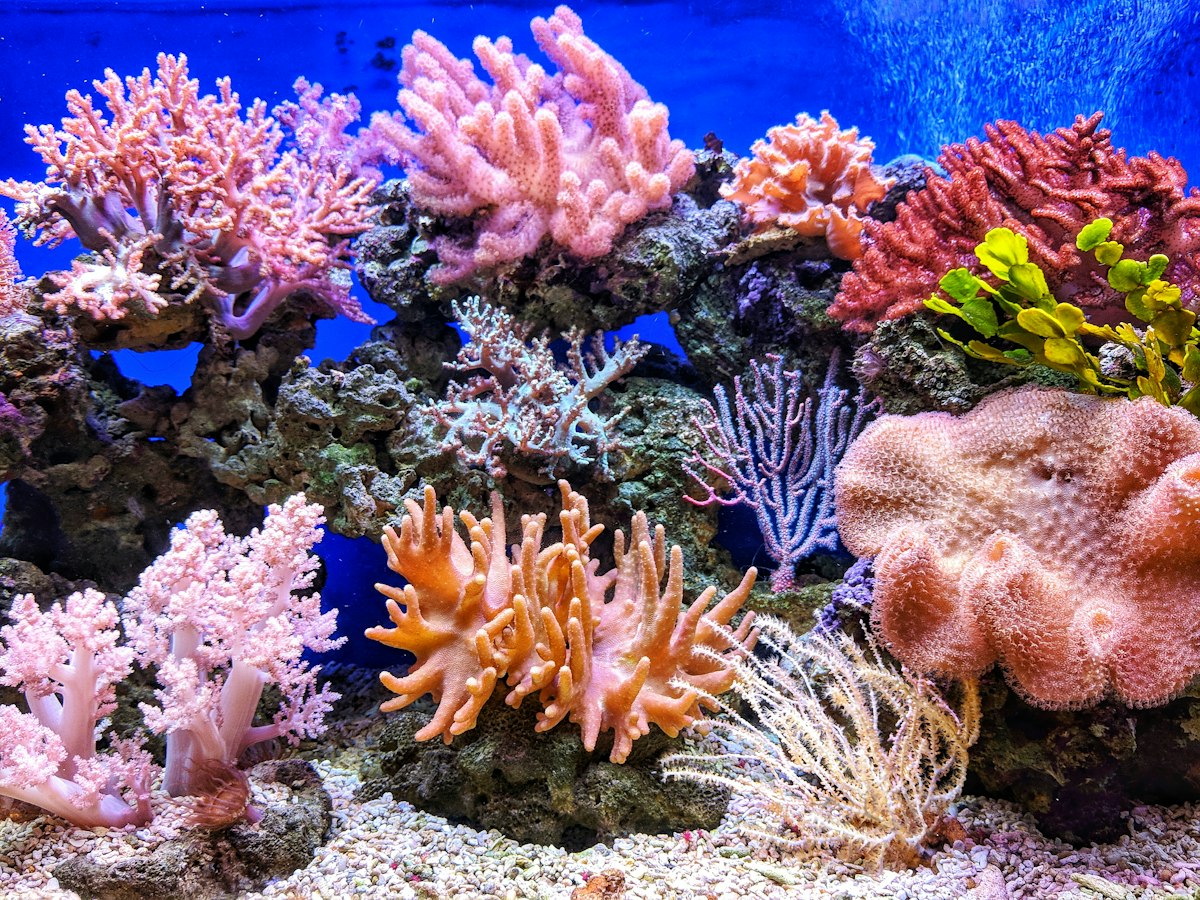
Twelve metres below the surface of the Réserve Naturelle de Saint-Barthélemy, in water so clear that the sandy bottom seems close enough to touch, marine biologist Dr. Emmanuelle Moreau hovers above a coral nursery that looks, at first glance, like an underwater vineyard. Dozens of PVC frames, anchored to the seabed with stainless steel pins, support suspended fragments of staghorn coral (Acropora cervicornis) and elkhorn coral (Acropora palmata) — species that once dominated Caribbean reefs but have declined by 97 percent across the region since 1980. Here, in Saint Barth's protected waters, they are being painstakingly regrown, fragment by fragment, in a programme that has cost €15 million over eight years and restored 4.2 hectares of living reef.
The Island That Chose Its Reef
Saint Barthélemy's decision to invest in large-scale coral restoration was not born of altruism alone — though the island's French territorial government has consistently demonstrated stronger environmental commitments than most Caribbean jurisdictions. The catalyst was Hurricane Irma in September 2017, which struck Saint Barth as a Category 5 storm and caused €3.8 billion in damage to buildings, infrastructure and marine ecosystems. While the island's hotels and villas were rebuilt within two years — the Villa Rockstar at the Eden Rock was accepting guests again by December 2018 — the reefs showed no signs of natural recovery.
Marine surveys conducted in 2019 by the Agence Territoriale de l'Environnement revealed that living coral cover had dropped from 35 percent (already below the healthy threshold of 50 percent) to just 8 percent around the island's most popular dive and snorkel sites. The reef at Colombier Bay — visible from the hiking trail that ultra-luxury visitors consider one of Saint Barth's signature experiences — was 94 percent dead. At Grand Cul-de-Sac, the lagoon reef that protects the bay from open-ocean swells and makes the area's €30,000-per-week villas habitable had lost its structural integrity.
The economic argument was stark. Saint Barth's reefs provide an estimated €45 million annually in ecosystem services — coastal protection, fisheries, tourism appeal — according to a 2020 valuation commissioned by the Collectivité. Without functioning reefs, the island's luxury tourism model faced an existential threat: guests paying €5,000 per night expect turquoise water and abundant marine life, not bleached rubble fields.
The Science of Rebuilding
The restoration programme, launched in 2021 in partnership with the Coral Restoration Foundation and France's Institut de Recherche pour le Développement, operates on three levels. The first is the nursery system: coral fragments collected from surviving colonies are grown on suspended frames in mid-water, where they receive optimal light and current exposure. After six to nine months, when fragments have grown to fist-size, they are transplanted onto prepared reef substrate using marine epoxy — a process that requires trained divers working in pairs, each capable of transplanting approximately 25 fragments per dive.
The second level is genetic selection. The programme maintains a library of 340 distinct coral genotypes, each tested for resilience to elevated water temperatures. Only genotypes that demonstrate thermal tolerance — the ability to survive water temperatures of 30°C for extended periods without bleaching — are propagated for reef restoration. This selective approach, pioneered by the Coral Restoration Foundation in the Florida Keys, effectively creates a climate-adapted reef that has a higher probability of surviving future marine heatwaves.
The third level is habitat engineering. The programme deploys artificial reef structures — designed by architects at the École Polytechnique Fédérale de Lausanne — that mimic the complex three-dimensional geometry of natural reefs. These structures, fabricated from pH-neutral marine concrete using 3D printing technology, provide the substrate complexity that juvenile fish and invertebrates need for shelter. Within 18 months of deployment, artificial structures in Saint Barth's waters have shown colonisation rates 40 percent higher than natural limestone substrate.
Where Conservation Meets Luxury
What makes Saint Barth's programme unique in the Caribbean is its integration with the island's luxury economy. The Collectivité imposed a voluntary conservation surcharge — €2 per night per guest room — that hotels and villas overwhelmingly adopted, generating approximately €800,000 annually for the restoration fund. Several of the island's most prominent villa owners have made direct donations: the programme's largest single gift, €1.2 million, came from the owner of a Gouverneur Bay estate who specified that funds be directed to restoring the reef visible from his terrace.
The programme has also created a new category of luxury experience. Guided reef restoration dives — where guests, accompanied by marine biologists, transplant coral fragments onto the reef — have become one of Saint Barth's most sought-after activities. Hotels including Le Barthélemy and Cheval Blanc offer restoration dive packages that combine the experience with marine biology briefings, underwater photography, and the assignment of a GPS-tagged coral fragment that guests can monitor remotely as it grows. The waiting list for restoration dives during the December-April high season is typically four to six weeks.
The Results, Five Years On
The programme's 2026 assessment, published in January, reported coral cover at monitored restoration sites averaging 28 percent — a 250 percent increase from the post-Irma low of 8 percent, and approaching the pre-hurricane baseline of 35 percent. Fish biomass at restored sites has increased by 180 percent, with the return of commercially and ecologically important species including Nassau grouper, queen parrotfish, and Caribbean spiny lobster. The Grand Cul-de-Sac reef has regained sufficient structural complexity to resume its wave-attenuation function, measurably reducing wave energy reaching the shore by 60 percent during winter swells.
The visual transformation is equally dramatic. Snorkellers at Colombier — a site that five years ago offered little more than algae-covered rubble — now encounter gardens of branching coral inhabited by schools of blue tang, sergeant majors, and the occasional reef shark. The reef at Petite Anse, restored in 2023, has developed a population of spotted eagle rays that has become a draw for underwater photographers. And at Pain de Sucre, the iconic offshore rock formation, the surrounding reef has recovered sufficiently to support the return of hawksbill sea turtles, which had not been documented at the site since 2016.
A Model for Island Luxury
Saint Barth's coral programme has attracted attention from luxury destinations facing similar challenges. Delegations from the Maldives, Seychelles, and Turks and Caicos have visited the island's nursery sites, and the programme's methodology — particularly its integration of conservation funding with luxury tourism revenue — has been cited by the UN Environment Programme as a model for small island economies.
For Saint Barth itself, the programme represents something more than environmental remediation. It is a statement about the kind of luxury the island intends to offer in the coming decades: not merely the luxury of beautiful buildings and fine dining, but the luxury of a living marine ecosystem that functions as it did before human intervention compromised it. In an era when discerning travellers increasingly judge destinations by their environmental stewardship, Saint Barth's €15 million bet on its reefs may prove to be the most strategically astute investment in its luxury infrastructure since the construction of the Eden Rock.
Published by Saint Barth Latitudes · Part of the Latitudes Media network. Explore more: Monaco · Riviera · Dubai