St. Jean: How Saint Barth's Village Bay Became the Caribbean's Most Effortlessly Glamorous Address
March 19, 2026 · 14 min read
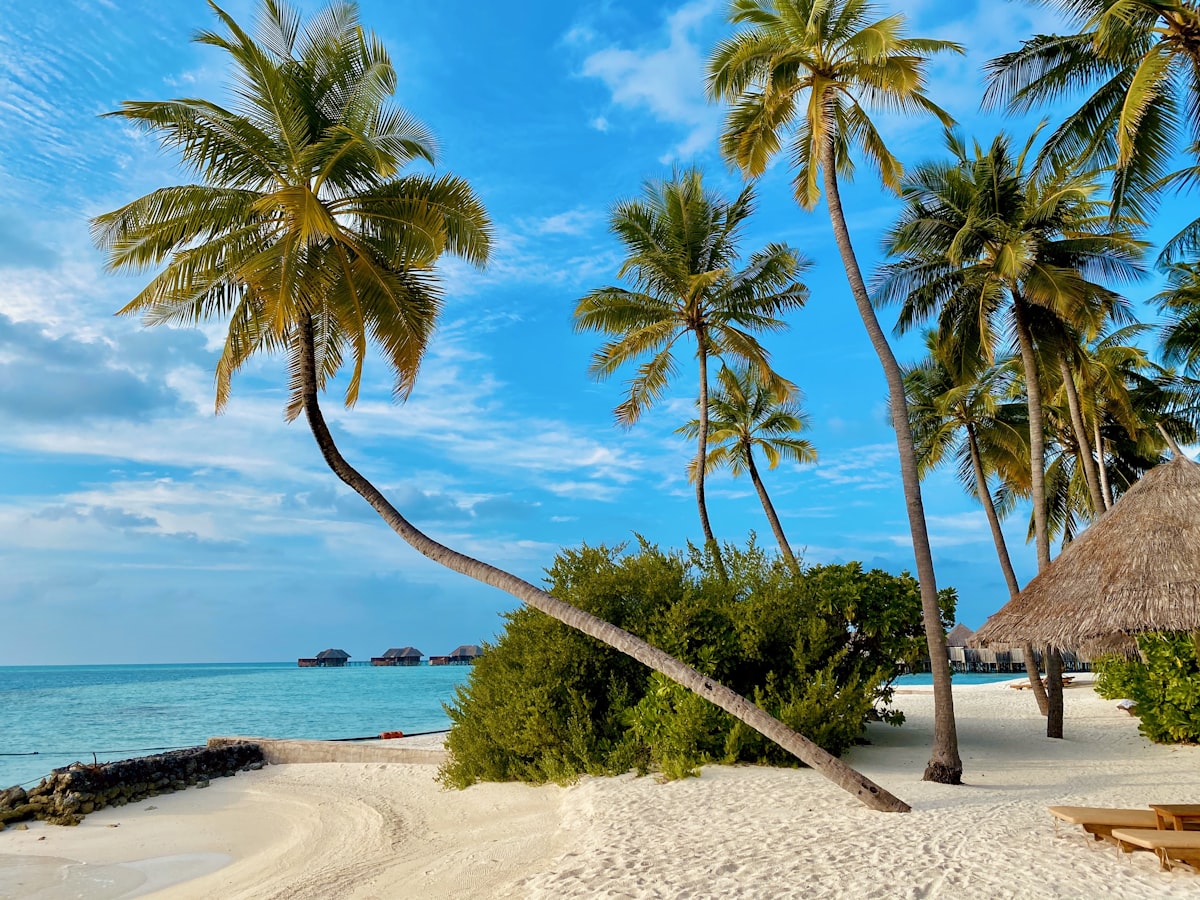
The first thing you see when landing at Gustaf III Airport — which is to say, the first thing you see after the momentary conviction that the pilot has confused the runway with a residential street — is St. Jean Bay. It unfolds below the aircraft's starboard wing in an 800-metre crescent of sand so white it appears to generate its own light, bisected by the rocky promontory on which Eden Rock perches with the theatrical confidence of a hotel that has been defining Caribbean glamour since before the term "boutique hotel" existed. This is, by any reasonable measure, the most dramatic hotel approach in the world — a descent steep enough to require specially certified pilots, over a beach busy enough to require sunbathers to hold their hats — and it establishes, in the thirty seconds between final approach and touchdown, everything you need to know about St. Jean: that luxury here is not a matter of exclusion but of proximity, that glamour and village life are not contradictions but complements, and that the bay's beauty is so casual, so uncontrived, that even a Twin Otter buzzing the beach at fifty feet cannot diminish it.
Eden Rock: The Anchor
No discussion of St. Jean is complete — or, really, possible — without Eden Rock. The hotel, founded in 1995 by the late David and Jane Matthews on a rocky outcropping that had previously served as the island's air traffic control tower, did not merely put St. Jean on the luxury map; it created the map itself. Before Eden Rock, Saint Barth's luxury proposition was distributed across a constellation of private villas, accessed through personal networks and word-of-mouth referrals that made the island effectively invisible to anyone outside a narrow Franco-Caribbean social circle. Eden Rock centralised that proposition, gave it a physical address and a visual identity — the red-roofed villa on the rock, the curved infinity pool cantilevered above the turquoise water — and, critically, made it accessible to a broader (though still extremely affluent) international clientele.
The hotel's reconstruction after Hurricane Irma in 2017, which destroyed approximately 95% of the original structures, produced a property that is simultaneously more luxurious and more architecturally restrained than its predecessor. The new Eden Rock — designed in collaboration with the Oetker Collection, which acquired a majority stake in 2013 — retains the original's insouciant charm while adding the technical infrastructure (hurricane-resistant construction, underground utilities, advanced water management) that the Caribbean's new climate reality demands. Room rates during the December-April peak season now start at approximately €2,500 per night for the most modest accommodation, rising to €15,000-€25,000 for the villa suites that occupy the rock's upper terraces. These prices are, by any standard, extraordinary — and they are consistently sold out months in advance.
The Beach: Two Faces of Paradise
Eden Rock's promontory divides St. Jean Bay into two distinct beach segments, each with its own character and clientele. The eastern section — stretching from the rock toward the airport — is the more active, more social, and more visually dramatic of the two, thanks to the ongoing spectacle of aircraft approaching the runway at what appears to be head height. This is where the beach bars congregate (Nikki Beach's St. Barth outpost occupies a privileged position near the eastern end), where the jet-set tableau of tanned bodies, designer swimwear, and improbable physical genetics is most concentrated, and where the bay's characteristic combination of shallow, protected water and gentle surf makes for swimming conditions that feel almost artificially perfect.
The western section, beyond the rock, is quieter, more residential in character, and — for those who know — significantly more desirable. The sand here is marginally finer, the water marginally clearer (protected from the eastern bay's boat traffic), and the beach's orientation captures afternoon light in a way that produces sunsets of operatic intensity. The villas that line the hillside above the western beach — most of them invisible from the sand, screened by tropical vegetation and the characteristic dry-stone walls that Saint Barth inherited from its Swedish colonial period — represent some of the island's most valuable residential real estate, with properties commanding €10-€20 million for relatively modest structures on relatively modest plots. The value, as everywhere in St. Jean, is in the address.
The Village Commercial Ecosystem
What distinguishes St. Jean from Saint Barth's other celebrated addresses — the hilltop estates of Lurin, the windswept privacy of Colombier, the superyacht theatre of Gustavia harbour — is its function as a genuine village centre. The small commercial strip along the road behind the beach, anchored by the Villa Créole shopping centre and the more recently developed Les Galeries du Commerce, houses a concentration of luxury retail, dining, and services that would be impressive in a city of 500,000, let alone an island of 10,000. Hermès, Louis Vuitton, Chopard, and Panerai maintain boutiques here that — per square metre — may be among the highest-grossing luxury retail spaces in the Americas.
But it is the independent operators that give St. Jean its distinctive commercial character. Maya's, the legendary beachfront restaurant where tables in the sand and a menu of impeccable Creole-French cuisine have been drawing a fiercely loyal clientele since the 1980s, remains the island's essential dining experience — not the most expensive, not the most technically accomplished, but the most St. Barth. The boutique pharmacies (where the skincare selection rivals a Parisian department store), the fromageries, the wine merchants stocking small-production Burgundy and Champagne at prices that, while eye-watering, are oddly fair given the logistics of shipping fine wine to a Caribbean island — all of these contribute to a village economy that feels less like a resort amenity and more like a functioning, if extremely affluent, community.
The Real Estate Calculus
St. Jean's property market operates under constraints that make conventional real estate analysis nearly meaningless. The bay's immediate catchment — defined generously as any property with a view of the water, accessed from the roads that climb the hillsides above the beach — contains approximately 150 residential properties, of which perhaps 10-15 become available in any given year. Demand, driven by a global pool of ultra-high-net-worth buyers for whom Saint Barth represents the apex of Caribbean living, is essentially unlimited at current price levels. The result is a market where prices have risen by approximately 15% per year since the post-Irma reconstruction, with no visible ceiling.
A representative transaction in late 2025 saw a three-bedroom villa on the western hillside — 180 square metres of interior space, 400 square metres of outdoor living area, a plunge pool, and an unobstructed view of the bay — close at €14.5 million. The same property had last traded in 2019 at €7.2 million. This doubling of value in six years reflects not speculative excess but the structural reality of a market where supply is permanently constrained (the island's building code, administered by the Collectivité, strictly limits new construction and mandates that all structures withstand Category 5 hurricane winds), demand is globally sourced, and the product — a view of St. Jean Bay from a hillside in the French Caribbean — cannot be manufactured elsewhere.
The Runway Effect
It would be disingenuous to discuss St. Jean without acknowledging the airport — or, more precisely, the peculiar cultural phenomenon that the airport has created. Gustaf III's 646-metre runway, terminated at one end by a steep hillside and at the other by a public road that intersects the approach path, makes landing at St. Jean one of aviation's most celebrated spectacles. The beach's eastern end, where incoming aircraft pass overhead at an altitude of approximately 10-15 metres, has become a pilgrimage site for aviation enthusiasts and social media content creators, generating a continuous stream of imagery that functions as the most effective tourism marketing any island has ever received — entirely free of charge.
For St. Jean's residents, the runway is a filter as much as an inconvenience. The noise (significant but brief — an aircraft passes every 20-30 minutes during daylight hours, and the airport closes at sunset) and the visual spectacle (which never entirely loses its capacity to astonish, even for long-term residents) create a self-selecting mechanism that ensures St. Jean attracts buyers who embrace the island's eccentricities rather than merely its beauty. The runway is, in this sense, a feature rather than a bug — a daily reminder that Saint Barth is not a sanitised resort destination but a real place with real infrastructure constraints, where luxury coexists with the slightly absurd logistics of island life.
The Enduring Proposition
St. Jean's appeal is, at its core, a paradox: it is the most public, most accessible, most "seen" address on an island that trades in privacy and exclusivity. The bay is a public beach; the boutiques are open to anyone; the aircraft approaches can be watched by tourist and billionaire alike. And yet this accessibility is precisely what makes St. Jean the island's most valuable address. In a Caribbean increasingly dominated by gated compounds, private islands, and members-only beach clubs, St. Jean offers something that money alone cannot buy: a genuine public life, lived in public space, among people who have chosen to be here not because the gates keep others out but because the beauty makes leaving impossible.
The bay glitters indiscriminately. The sunset, when it comes, does not check the net worth of its audience. And somewhere on the rock, a glass of rosé catches the last light at exactly the angle that makes everything — the sand, the water, the hills, the absurd little runway — look like it was designed by someone who understood that the highest luxury is the one that feels most like accident.
In the Caribbean's relentless competition for the ultra-luxury dollar, St. Jean Bay wins by being the one address where glamour never forgot how to be a village.