Saline: How Saint Barthélemy's Ancient Salt Pond Became the Caribbean's Most Naturistically Refined Luxury Beach
April 1, 2026 · 12 min read
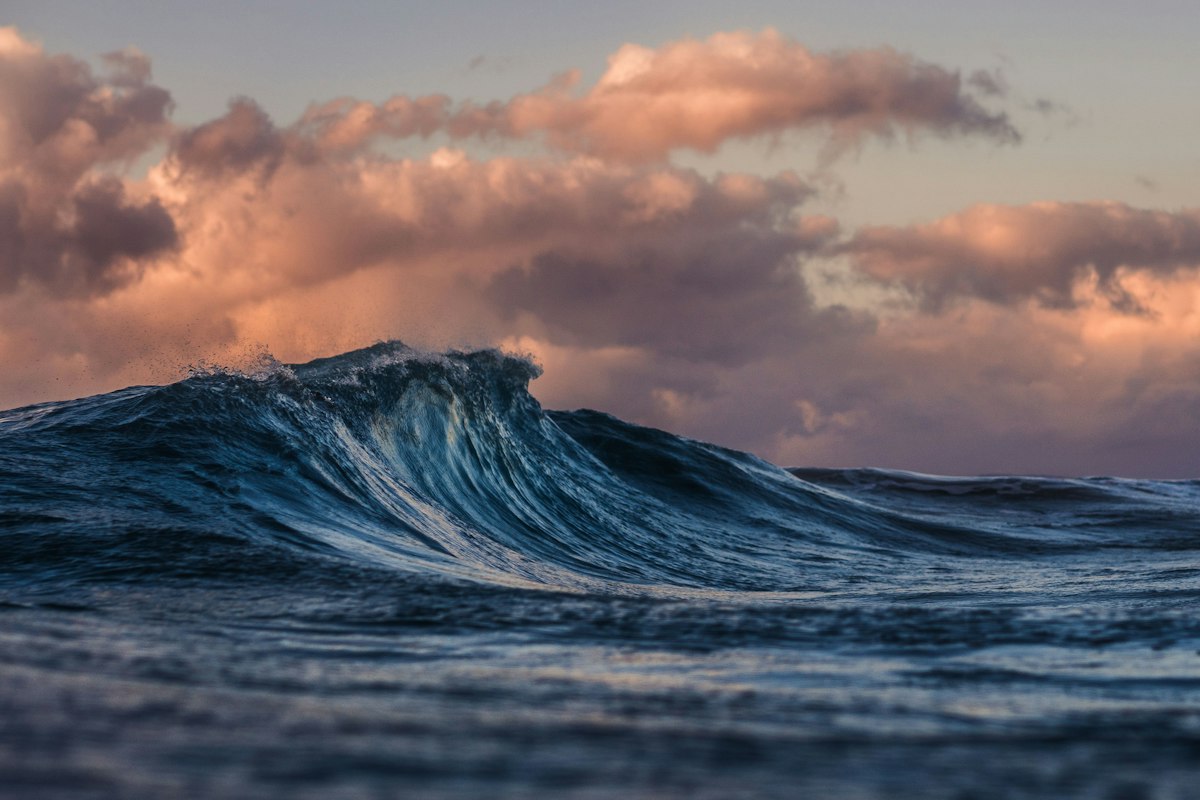
The approach to Saline is itself a kind of ceremony. You leave your car at the end of a narrow road that terminates in a dusty parking area — no valet, no attendant, no signage beyond a modest wooden marker — and walk. The path crosses a low ridge, passes through a stand of sea grape trees whose leathery leaves rattle in the trade wind, and arrives at the edge of the salt pond that gives the beach its name: a shallow, irregularly shaped body of water that has been evaporating seawater into crystalline salt since long before the French Crown dispatched its first colonial administrators to this eight-square-mile volcanic fragment in the seventeenth century. The pond is pink in certain lights — tinted by the halophilic bacteria and brine shrimp that thrive in its hyper-saline waters — and its margins are white with crusted salt. Beyond it, visible but not yet accessible, is the beach itself: a crescent of sand so fine and so pale that it appears, from this distance, to glow.
The Salt Economy: Colonial Industry as Landscape
Salt was, for centuries, the economic foundation of Saint Barthélemy's existence — the reason the Swedish Crown purchased the island from France in 1784, and the commodity around which the island's modest colonial economy was organised. The salines — salt ponds — that dot the island's leeward coast were not natural features but engineered landscapes: shallow basins, carefully graded and maintained, in which seawater was admitted through sluice gates and allowed to evaporate under the Caribbean sun until the salt crystallised on the pond floor and could be raked into pyramidal heaps for drying and export.
The Grande Saline — the salt pond behind the beach — was the largest and most productive of these installations, and its product was prized throughout the Lesser Antilles for its purity and its flavour: a clean, mineral salinity derived from the particular chemistry of the seawater on this stretch of coast and from the volcanic minerals that leached into the evaporating brine from the surrounding hillsides. Salt production ceased in the mid-twentieth century, when the economics of industrial extraction made artisanal Caribbean salt uncompetitive, but the pond itself persists — a relic of colonial industry that has, through the benign neglect of abandonment, become one of the island's most ecologically valuable habitats.
The Beach: Sand as Substance
Saline beach is approximately 600 metres long — not vast by Caribbean standards, but generous for an island where most beaches are measured in dozens of metres rather than hundreds. Its sand is of the type that geologists classify as biogenic carbonate: derived not from the erosion of rock but from the accumulated skeletons of marine organisms — corals, foraminifera, molluscs, sea urchins — broken down by wave action over millennia into particles so fine that they feel, underfoot, like warm flour. The colour is not quite white — there is a faint warmth to it, a suggestion of cream or champagne — and it does not behave like ordinary sand: it does not stick to wet skin, it does not burn bare feet even in the midday sun (the carbonate particles reflect rather than absorb solar radiation), and it produces, when walked upon, a faint, musical squeaking that is audible only in the absence of other noise.
The water at Saline is exceptional even by the standards of Saint Barthélemy, which are themselves exceptional by the standards of the Caribbean, which are exceptional by any global standard. The seabed slopes gradually from the shore, passing through a sequence of blues — turquoise in the shallows, aquamarine at ten metres, cobalt at twenty, and finally the deep, almost purple blue of the open Atlantic beyond the reef line — that constitutes a colour gradient of such beauty that it seems designed rather than natural. There is no reef directly offshore; the bottom is sand, which means that the water's clarity is determined primarily by wave action rather than by biological turbidity. On calm days — which are frequent between May and November, when the trade winds ease and the Atlantic swell subsides — visibility exceeds thirty metres, and the water is so transparent that swimmers cast shadows on the seabed as sharp and defined as shadows on dry land.
The Absence: Luxury by Subtraction
What distinguishes Saline from every other beach on Saint Barthélemy — and from virtually every other luxury beach destination in the Caribbean — is what it does not have. There are no sun loungers. No umbrellas for rent. No beach bar. No restaurant. No music. No motorised water sports. No vendors of any kind. There is not even a lifeguard, though the municipality posts warning flags when conditions are dangerous. The beach is classified as a zone naturelle — a natural zone — within the island's planning framework, which means that no permanent construction of any kind is permitted within its boundaries, and this prohibition is enforced with a rigour that reflects the particular character of Saint Barthélemy's environmental governance: permissive in matters of private architecture and commercial development, but absolutist in its protection of the island's few remaining undeveloped coastlines.
This emptiness is the point. Saline offers a luxury that no amount of money can purchase elsewhere on the island — because elsewhere on the island, as on most islands in the Caribbean, the presence of money manifests as the presence of infrastructure: of bars and restaurants and water-sports concessions and sun-lounger attendants and all the other paraphernalia of managed recreation. At Saline, you bring what you need and you take it away when you leave. There are no bins, no facilities, no services. The beach is, in the most literal sense, a natural space that has been preserved in something close to its pre-human condition — or rather, in the condition that nature has reasserted since the salt industry abandoned it.
The Flora: Coastal Ecosystem
The vegetation surrounding Saline constitutes a textbook example of Caribbean littoral ecology — a sequence of plant communities arranged in bands parallel to the shore, each adapted to a specific combination of salt exposure, wind stress, and substrate. Immediately behind the beach, the pioneer community: sea grapes (Coccoloba uvifera), whose round, leathery leaves are specifically evolved to minimise salt damage and water loss; and manchineel trees (Hippomane mancinella), the infamous "beach apple" whose fruit, sap, and even the rain that drips from its leaves are toxic — the most dangerous tree in the Western Hemisphere, and one that is carefully sign-posted at Saline for the protection of unwary visitors.
Behind this coastal fringe, the dry tropical forest: cactus, century plants, frangipani, and the native gommier (Bursera simaruba), whose distinctive red, peeling bark has earned it the local name "tourist tree." The hillsides above the beach are covered in this drought-adapted forest, which blooms spectacularly after the autumn rains — a brief, intense period of flowering that transforms the normally dun-coloured landscape into a patchwork of green, yellow, and pink.
The Ornithological Dimension
The salt pond behind the beach is, for birders, the primary attraction. Its hyper-saline waters support populations of brine shrimp (Artemia salina) that attract, during the winter months, small flocks of greater flamingos — not resident, but regular winter visitors whose presence on this tiny volcanic island, thousands of kilometres from the nearest large flamingo colony, is one of the minor miracles of Caribbean ornithology. The pond also hosts herons — great blue, tricoloured, and the diminutive green heron — stilts, sandpipers, and, during migration season, warblers and other passerines that use the pond's insect-rich margins as a refuelling stop on their trans-Caribbean flights.
The juxtaposition is remarkable: on one side of the dune, one of the Caribbean's most beautiful beaches, frequented by some of the world's wealthiest visitors; on the other, a colonial-era salt pond where flamingos feed in water the colour of rosé wine. No landscape architect could have designed a more perfectly composed scene.
Getting There & Practical Intelligence
Saline is located on the southeastern coast of Saint Barthélemy, approximately ten minutes by car from Gustavia. The parking area accommodates perhaps thirty vehicles; during peak season (December through April), arriving before ten AM is advisable. The walk from the car park to the beach takes five to seven minutes and involves a modest hill — comfortable in flip-flops but easier in proper shoes.
Bring everything you need: water, food, sun protection, and something to carry your waste out. There are no facilities of any kind. The western end of the beach is traditionally clothing-optional — a practice tolerated rather than officially sanctioned, and conducted with the discreet good manners that characterise most aspects of Saint Barthélemy's social code. Swimming conditions vary with the season: generally calm in summer, with larger surf in winter when Atlantic swells wrap around the island's southern coast. Respect the flag system and the posted warnings; the undertow on big-surf days can be serious.
Published by Saint-Barth Latitudes · Part of the Latitudes Media network