Destination Weddings on Saint Barthélemy: How the Caribbean's Most Exclusive Island Became the World's Most Intimately Curated Nuptial Address
April 1, 2026 · 12 min read
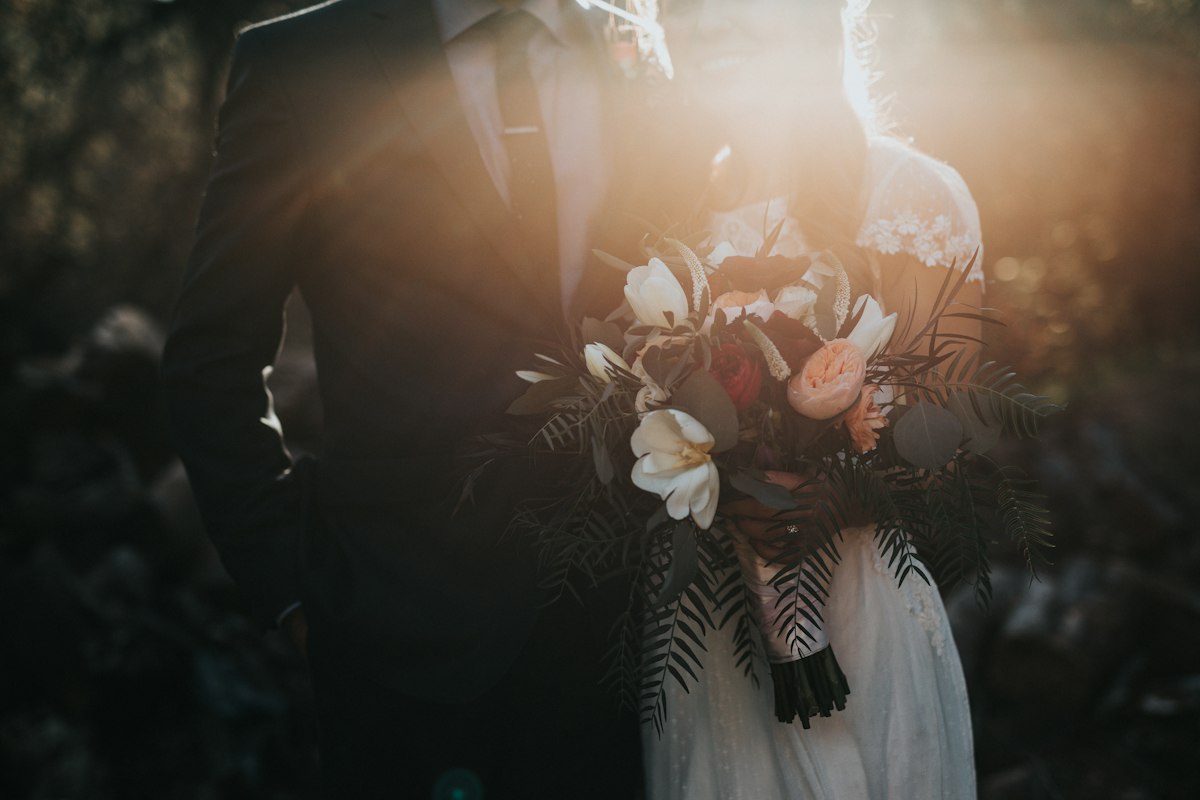
The modern luxury wedding industry has inflated itself into a spectacle of industrial proportions — three hundred guests, twelve-piece orchestras, cascading floral installations that require structural engineering, and venue capacities measured in thousands. Saint Barthélemy represents the deliberate negation of every one of these excesses. On an island where the largest hotel contains fewer than seventy rooms, where there are no convention centres, no ballrooms capable of seating two hundred, and no resort infrastructure designed for mass celebration, the wedding becomes what it perhaps should always have been: an intimate ceremony between people who genuinely know each other, staged in a setting of such natural beauty that decoration becomes superfluous.
The Villa as Cathedral
The defining architectural fact of a Saint Barth wedding is the absence of purpose-built wedding venues. There are no chapels-for-hire on headlands, no glass pavilions erected for photographic opportunities, no "wedding gardens" with permanent arbours and fairy-light infrastructure. Instead, the ceremony occurs in the same space where the couple and their guests live during their stay: the private villa. This is not a limitation but a philosophical statement. When the terrace where you exchange vows is the same terrace where you had breakfast that morning, the ceremony acquires a domestic intimacy that no rented venue can replicate. The Hôtel de la Collectivité in Gustavia — the town hall where civil ceremonies are legally conducted — provides the French administrative formality, but the emotional centre of every Saint Barth wedding is the villa itself.
The island's ultra-luxury rental market has responded to this demand with properties specifically designed to accommodate celebratory gatherings without abandoning residential scale. Villas in Gouverneur, Lurin, and Pointe Milou now routinely include ceremony terraces with ocean-facing orientations calculated for golden-hour light, reception spaces that flow from interior to exterior without threshold, and kitchen facilities capable of supporting the work of private chefs preparing seven-course menus for forty guests. The rental premium for wedding weeks — typically 30 to 50 percent above standard high-season rates — reflects not merely demand but the additional wear, staffing, and coordination these events require. At €200,000 to €500,000 for a week-long celebration in a premier villa, the cost structure is paradoxically exclusive and intimate: fewer guests, higher per-capita investment, deeper experience.
The Twenty-Four-Guest Average
Industry data from the island's principal wedding planners reveals a statistic that distinguishes Saint Barth from every other luxury wedding destination: the average guest count is twenty-four. Not two hundred and forty. Not one hundred and twenty. Twenty-four. This number is not imposed by regulation but by the physical and social architecture of the island itself. When the nearest commercial airport is in Sint Maarten, twenty minutes away by turboprop, and when every guest requires villa accommodation on an island with fewer than one thousand rental beds, the guest list curates itself with brutal efficiency. Only those who are willing to invest the time, expense, and logistical effort of reaching Saint Barth will attend — and that willingness is itself a filter for genuine intimacy.
The consequences of this scale are profound. At twenty-four guests, the couple can have a meaningful conversation with every person present. The children of friends can be included without the ceremony descending into crowd management. The photographer captures candid moments rather than choreographed group formations. And the catering moves from banquet logistics to private dining — courses served on ceramic rather than from chafing dishes, wines poured from bottles rather than dispensed from stations, desserts plated individually rather than arranged on industrial towers. The wedding becomes a dinner party with vows, which is arguably what it should always have been.
The Planners: Invisible Architecture
Saint Barth's wedding planning ecosystem is extraordinarily concentrated. Fewer than ten firms handle the majority of the island's destination weddings, and their operating model bears no resemblance to the industrial wedding-planning factories of metropolitan centres. These are typically two- or three-person operations led by individuals who have lived on the island for a decade or more, who know every villa manager, every chef, every florist, and every fisherman by first name. Their value proposition is not logistical coordination — any competent project manager can synchronise vendors — but local intelligence: knowing which villa's terrace catches the last light at precisely 5:47 PM in February, knowing which caterer sources langoustines from the morning's catch rather than frozen imports, knowing which musician plays acoustic sets that complement rather than overwhelm an oceanfront setting.
The planning fee — typically €15,000 to €50,000 for a full-service wedding — purchases not execution but curation. The difference is significant. An executor follows instructions; a curator makes selections from a finite inventory of excellence, combining elements that the client would never have discovered independently. The best Saint Barth wedding planners function as cultural translators, mediating between the couple's vision and the island's specific possibilities, gently redirecting requests that would work in Tuscany or the Hamptons but would feel incongruous on an eight-square-mile Caribbean island where the dominant aesthetic is barefoot elegance rather than architectural formality.
Floristry Without Import
The floral architecture of a Saint Barth wedding is constrained by geography in ways that produce results superior to anything available in metropolitan floral studios. The island has no wholesale flower market. There are no refrigerated warehouses stocked with Ecuadorian roses and Dutch tulips. What exists is tropical abundance: frangipani, bougainvillea, bird of paradise, heliconia, hibiscus, and orchids that grow on the hillsides with a profligacy that continental florists can only simulate. The best Saint Barth wedding florists work almost exclusively with what the island provides, supplemented by modest shipments from Guadeloupe and Martinique. The result is arrangements that look like they belong — because they do. There are no peonies flown twelve thousand kilometres to wilt in Caribbean humidity; there are frangipani garlands that perfume the evening air with a scent that guests will associate with the ceremony for the rest of their lives.
This botanical authenticity extends to the ceremony's spatial design. Rather than constructing elaborate floral arches and installation walls that require hours of assembly and look identical to installations in Bali, Positano, or Santorini, Saint Barth's florists work with the existing landscape. A ceremony beneath a century-old flamboyant tree requires no additional canopy. A reception on a terrace overlooking Gouverneur needs no backdrop — the bay provides it. The aesthetic philosophy is additive restraint: enhance what exists rather than replace it with something imported. The result is weddings that are photographed beautifully precisely because they do not look like every other luxury destination wedding on Instagram.
The Culinary Wedding
Saint Barth's gastronomic density — more Michelin-quality restaurants per capita than almost any other Caribbean destination — has produced a wedding catering culture that operates at restaurant level rather than event-catering level. The distinction matters enormously. Event catering, even at its most elevated, is designed for scale: dishes that can be held at temperature, plated rapidly, and served to large numbers simultaneously. Restaurant cooking is designed for immediacy: dishes that are finished à la minute, sauced at the last moment, and served within sixty seconds of completion. At twenty-four guests, a Saint Barth wedding can operate at restaurant rhythm rather than banquet rhythm, and the best private chefs on the island exploit this advantage ruthlessly.
A typical wedding dinner begins with passed canapés on the villa terrace during golden hour — tuna tartare on crispy wonton, lobster medallions with passion fruit, local accras de morue reimagined as elegant one-bite morsels. The seated dinner that follows is structured as a six- or seven-course tasting menu, each course accompanied by wines selected not from a standard list but from the specific reserves of the island's best restaurants and private cellars. The cost — €300 to €800 per person for the dinner alone — reflects not extravagance but the economics of private-chef cooking: one kitchen, one team, one evening, twenty-four covers. It is, by any measure, one of the finest meals any guest will ever eat, and it occurs not in a restaurant but in the private home where the couple is beginning their married life.
Legal Cartography
Saint Barthélemy's status as a French overseas collectivity provides a legal framework for marriage that is simultaneously rigorous and romantically Gallic. Civil ceremonies must be conducted by a municipal officer — typically the mayor or a deputy — at the Hôtel de la Collectivité in Gustavia. The requirements include residency documentation (one party must reside on the island for at least forty days before the ceremony), publication of banns, and the presentation of various civil documents authenticated and apostilled. For non-French couples, this bureaucratic choreography requires advance planning of three to six months and typically involves a local wedding planner who functions as a documentary liaison with the mairie.
Many international couples navigate this complexity by conducting the legal ceremony in their home jurisdiction and using the Saint Barth celebration as a symbolic ceremony — legally unnecessary but emotionally central. This dual-ceremony approach has become so common that it constitutes the majority of Saint Barth weddings. The symbolic ceremony, freed from legal constraint, can be conducted wherever the couple chooses — on a beach, a hillside, a villa terrace, a yacht — and officiated by whomever they wish: a friend, a family member, a celebrant whose words carry personal rather than juridical authority. The result is ceremonies of remarkable emotional authenticity, unburdened by the performative gravity that legal requirements sometimes impose.
The Anti-Spectacle
What Saint Barthélemy ultimately offers the couple seeking a wedding venue is not a destination but a philosophy: that the most luxurious celebration is the one that requires no audience beyond the people you love, no venue beyond the place where you are already living, and no decoration beyond the landscape that drew you there. In a wedding industry that has inflated itself into a branch of event production — complete with "creative directors," "experiential designers," and budgets that rival film productions — Saint Barth proposes the radical alternative of intimate scale, natural beauty, and the quiet conviction that twenty-four people who genuinely care about your marriage are worth more than three hundred who came for the party.
The island's wedding bookings reflect this philosophy's commercial viability. Advance reservations for premium wedding-week villa rentals are now typically secured eighteen to twenty-four months in advance, with peak-season availability (December through April) effectively sold out within hours of release. The waiting lists maintained by the island's leading planners contain names that, if published, would constitute a directory of global wealth and cultural influence. These clients do not choose Saint Barth despite its limitations — the small airport, the limited accommodation, the absence of grand venues — but because of them. Every constraint is a filter, and every filter produces intimacy, and intimacy, in the end, is the only luxury that cannot be manufactured at scale.
Saint Barth Latitudes
Premium intelligence on Saint Barthélemy luxury real estate, lifestyle, and island living.
Request Access →