Colombier: How Saint Barth's Most Inaccessible Beach Became the Caribbean's Definitive Measure of Luxury Commitment
March 2026 · 13 min read
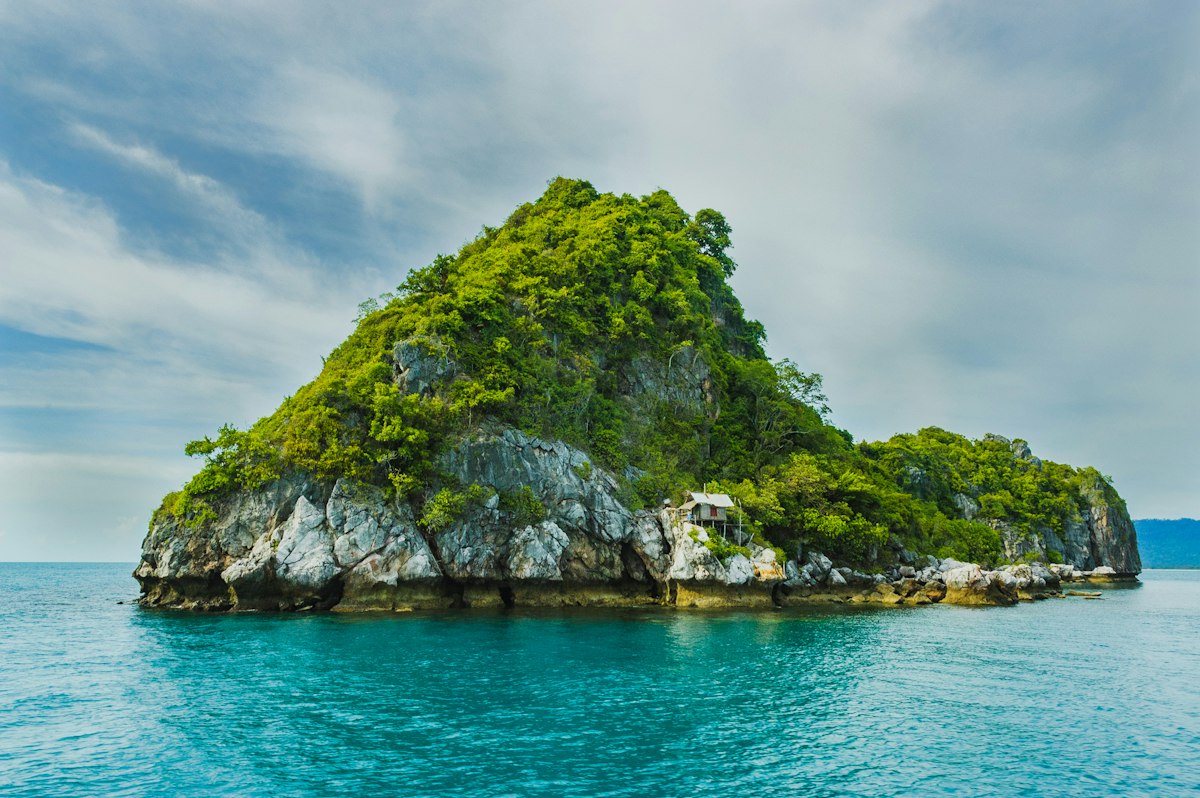
In the taxonomy of Caribbean beaches, there is a category that exists beyond "beautiful" and "exclusive" — a category defined not by what is present but by what is absent. No road access. No beach bar. No sunbed concession. No music. No cell signal, in most conditions. No way to arrive except by a twenty-minute hiking trail that descends 130 metres through dry tropical forest, or by tender from a yacht anchored in the bay. This category has, for practical purposes, a single member: Colombier.
Located at the northwestern tip of Saint Barthélemy, Colombier is the island's most protected natural site — designated as a Réserve Naturelle, closed to motorised vessels within 300 metres of shore, and subject to building restrictions that have preserved its hillsides in a condition that is, by Caribbean standards, almost pre-colonial. The beach itself — a 200-metre crescent of white sand backed by sea grape trees and framed by two rocky headlands — is routinely described as Saint Barth's most beautiful. This is accurate but insufficient. Colombier is not merely beautiful. It is, in an era when luxury is increasingly defined by access and exclusivity, the Caribbean's most rigorous test of whether you want something enough to earn it.
The Trail as Filter
The primary hiking trail to Colombier begins at the end of the road in Petite Anse, at the island's northwestern extremity, where a small parking area accommodates perhaps fifteen vehicles. From here, the trail — maintained by the Réserve Naturelle but deliberately left unpaved and unimproved — descends through low scrub and cacti, following the contours of the hillside with occasional scrambles over exposed rock, before emerging at the beach's eastern end after approximately twenty minutes of walking.
This trail is Saint Barth's most effective social filter. It eliminates, without discrimination or doorman judgment, anyone who considers a twenty-minute walk in tropical heat an unreasonable price for a morning at the beach. The result is a self-selecting community of beachgoers who are, as a demographic, notably different from those at Saint Jean, Gouverneur, or even the relatively secluded Saline. Colombier's regular visitors tend to be fit, outdoor-oriented, and possessed of the kind of confidence that comes from not needing to be seen — because there is, on most mornings, almost no one to see them.
On a typical weekday in high season (December through April), Colombier's beach hosts between ten and thirty people. On weekends, this may rise to fifty. For comparison, Nikki Beach at Saint Jean accommodates several hundred on a busy Saturday. The arithmetic of exclusivity is simple: Colombier delivers a guest-to-sand ratio that no private beach club, regardless of its membership fees, can match.
The Marine Approach
For those who prefer not to walk — or who wish to combine the beach with a morning of coastal cruising — Colombier is accessible by tender from yachts anchored in the bay. The anchorage, protected from the prevailing trade winds by the headlands that bracket the beach, is one of Saint Barth's most coveted overnight positions, and during the winter season it is common to find a dozen vessels at anchor, ranging from 40-foot sailing yachts to 80-metre superyachts whose tenders shuttle guests to shore in a waterborne commute that is, by any measure, the most civilised way to arrive at a beach.
The Réserve Naturelle's regulations prohibit motorised vessels from approaching within 300 metres of shore, meaning that even the most opulently appointed tender must cut its engine and row or drift the final stretch. This regulation, enforced by the reserve's patrol boat and respected by the yachting community with a compliance rate that reflects genuine environmental commitment rather than merely regulatory fear, creates a marine buffer zone that preserves the bay's extraordinary water clarity — visibility of 20 to 30 metres is standard — and protects the coral formations that fringe the headlands.
The snorkelling at Colombier is, by common assessment, the best on Saint Barth — a consequence of both the water quality that the motorised-vessel exclusion zone maintains and the rocky substrate that the headlands provide. Hawksbill turtles, which nest on the beach and feed on the seagrass beds within the bay, are encountered with a regularity that would be remarkable on a remote, uninhabited island and is extraordinary for a beach within twenty minutes' walk of a road on an island with 10,000 residents.
The Hillside Estates
The hills surrounding Colombier — specifically, the slopes that rise east and south from the beach toward the ridgeline that separates the bay from Flamands — contain some of Saint Barth's most significant private estates. These properties, built on plots that were acquired in the 1980s and 1990s when the Colombier headlands were considered too remote for serious residential development, now command the island's highest prices — not because of their size or architectural distinction (though several are architecturally exceptional) but because of the combination of privacy, view quality, and proximity to the beach that their positions deliver.
The David Rockefeller estate — a compound of low-slung pavilions on the eastern headland, designed to minimise visual impact on the landscape and accessed by a private track that branches from the public trail — set the benchmark for Colombier development when it was originally constructed. The property demonstrated that it was possible to build on these hillsides in a way that honoured both the ecological sensitivity of the site and the lifestyle expectations of an ultra-high-net-worth owner. Subsequent estates on the western headland and the upper slopes have followed this precedent, employing architects who specialise in landscape-sensitive tropical construction and using materials — local stone, sustainably sourced hardwoods, green roofing systems — that allow the buildings to recede into the terrain rather than dominate it.
Current pricing for Colombier hillside estates ranges from €15 to €40 million, with the most exceptional — those with direct sightlines to the beach, sunset-facing terraces, and sufficient elevation to capture cross-ventilation from both the trade winds and the thermal breezes that rise from the bay — trading above €50 million in private transactions that rarely, if ever, appear on public listings. These are not properties that are marketed. They are properties that are whispered about, offered through networks of trust that connect Saint Barth's established real estate agents with the island's longest-standing property-owning families.
The Conservation Compact
Colombier's preservation is not the product of accident or neglect but of deliberate policy decisions that reflect a consensus — rare in the Caribbean and almost unique on an island as commercially developed as Saint Barth — that some places are more valuable undeveloped than developed. The Réserve Naturelle designation, which covers the bay, the beach, and significant portions of the surrounding hillsides, imposes construction restrictions that are, in practice, prohibitive for new development. The few building permits that have been granted in recent years have been limited to renovations and modest extensions of existing structures, subject to environmental impact assessments that typically require twelve to eighteen months of review.
This regulatory framework functions, for existing property owners, as a guarantee of permanent exclusivity. The Colombier hillside estates cannot be subdivided. The beach cannot be commercialised. The anchorage cannot be expanded. The trail cannot be widened or paved. Each of these restrictions reduces the potential supply of competing properties and amenities, concentrating the value of Colombier's natural assets in the hands of those who already own access to them.
The environmental logic is equally compelling. The bay's seagrass beds — which provide habitat for the juvenile turtles that are critical to the survival of the Caribbean's hawksbill population — require the water quality that the motorised-vessel exclusion zone maintains. The dry forest through which the hiking trail passes supports endemic plant species that exist nowhere else on the island. The coral formations on the headlands, though modest in extent, represent some of the healthiest reef structures in the northern Lesser Antilles, their condition a direct consequence of the sediment reduction that the hillside building restrictions achieve.
The Colombier Ethos
What Colombier ultimately represents — and what distinguishes it from every other luxury address on Saint Barth, indeed from most luxury addresses in the Caribbean — is a proposition that the contemporary luxury market rarely encounters: that the highest form of luxury is not the accumulation of amenities but their deliberate absence. No restaurant means no reservations, no social performance, no obligation to be anywhere at any time. No road access means no traffic, no delivery vans, no casual visitors. No cell signal means no emails, no notifications, no connection to the system of digital demands that constitutes, for most ultra-high-net-worth individuals, the texture of daily life.
This is luxury as subtraction — a concept that the hotel industry has theorised about for years (digital detox retreats, technology-free zones, barefoot luxury) but that Colombier delivers not as a designed experience but as a geographic fact. You cannot be interrupted at Colombier because the infrastructure of interruption does not reach there. You cannot be seen at Colombier because the people who might see you did not walk the trail. You cannot be anything at Colombier except present — on a white sand beach, in turquoise water, under a Caribbean sky, in a silence broken only by the sound of waves on sand and the occasional cry of a frigate bird riding the thermals above the headlands.
In an age that has perfected the manufacture of exclusive experiences, Colombier remains stubbornly, beautifully inexperienceable — except by those willing to walk.
Explore Saint Barth
Discover the island's most exclusive addresses and lifestyle destinations.
← Back to Saint Barth LatitudesPart of the Latitudes Media network — premium destination intelligence. Also explore Monaco, Riviera, and Mauritius.