Pointe Milou: How Saint Barth's Sunset Promontory Became the Island's Most Architecturally Dramatic Luxury Clifftop
March 21, 2026 · 13 min read
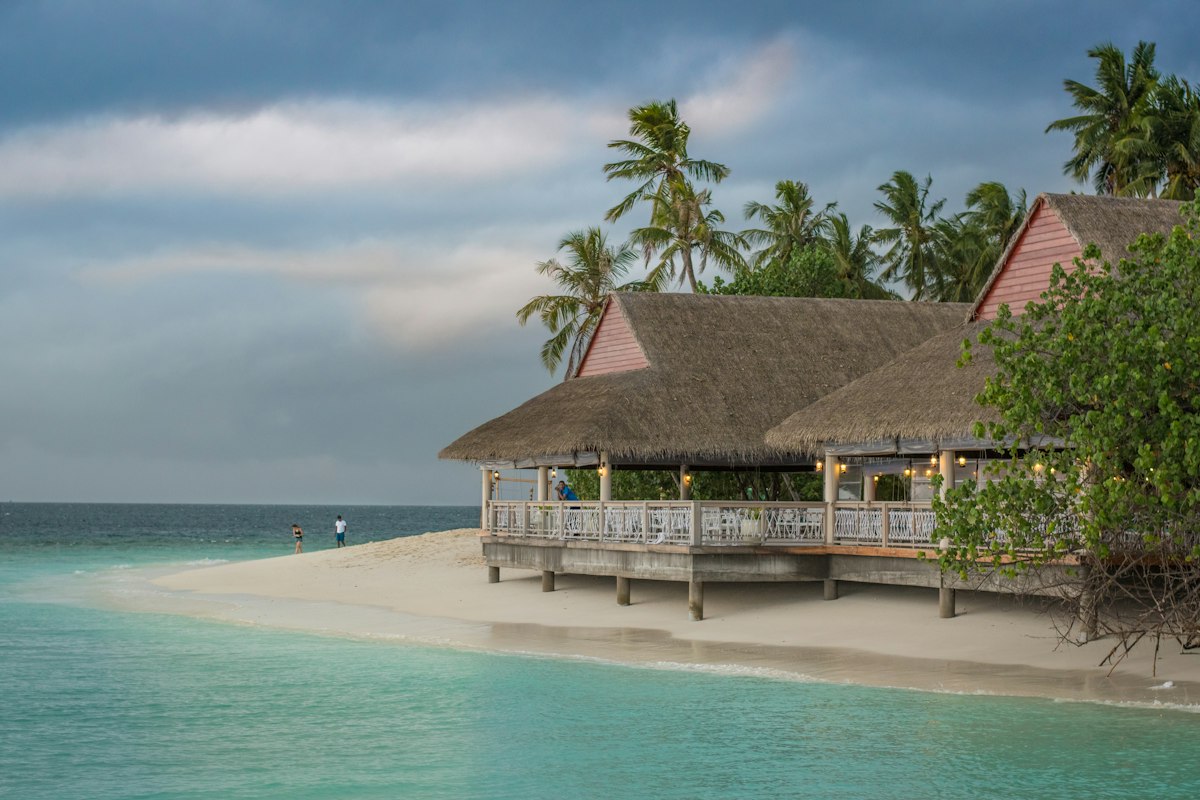
There is a moment each evening on Pointe Milou — approximately seventeen minutes before the sun touches the horizon — when the volcanic rock turns the colour of burnt copper and the infinity pools catch fire. It lasts perhaps four minutes. Then the light softens, the Caribbean shifts from turquoise to indigo, and the promontory settles into the violet hour that has made this northwestern headland the most sought-after sunset address in the Lesser Antilles.
Pointe Milou is not Saint Barth's most famous neighbourhood. It lacks Gustavia's harbour-front theatre, Colombier's celebrity mythology, or Gouverneur's beach-access prestige. What it possesses, instead, is something that cannot be replicated on a 25-square-kilometre island where every buildable plot has been catalogued and contested: elevation, aspect, and an unobstructed 270-degree panorama that encompasses Saint Martin, Saba, and the open Atlantic beyond.
The Geography of Desire
The promontory extends northwest from the island's central spine, dropping steeply into the Caribbean on three sides. The geological formation — ancient volcanic basalt overlaid with coral limestone — creates natural terracing that architects have exploited with increasing sophistication over the past two decades. The earliest villas, built in the 1990s, sat atop the ridge in conventional Caribbean plantation style: hip roofs, louvred shutters, covered galleries. The current generation has abandoned these conventions entirely.
The defining architectural gesture on contemporary Pointe Milou is the cantilever. Concrete and steel platforms project beyond the cliff edge, suspending living spaces — and, inevitably, infinity pools — over the void. The most celebrated example, Villa Arawak, extends a twelve-metre cantilever over the northern cliff face, creating a master bedroom that appears to float above the sea. The structural engineering required is extraordinary — each metre of cantilever demands exponential increases in foundation depth, driven into the basalt to withstand Category 5 wind loads. The cost of this drama: roughly €3,200 per square metre above equivalent flat-terrain construction.
The Villa Economy
Pointe Milou's rental market operates at the apex of Saint Barth's already stratospheric pricing structure. During the peak season — Christmas through New Year, when the island's population swells from 10,000 to an estimated 35,000 — the neighbourhood's top-tier villas command €150,000 to €280,000 per week. These are not merely expensive houses with good views. They are fully staffed hospitality operations: private chefs trained in Michelin-starred kitchens, dedicated concierge teams, yacht coordination, helicopter transfers from Sint Maarten's Princess Juliana Airport.
The purchase market is thinner and more opaque. Pointe Milou's buildable inventory is essentially fixed — perhaps 45 villa plots, of which roughly 40 are developed. Transactions occur through private networks, rarely appearing on public listing platforms. When they do surface, prices range from €12 million for older constructions requiring renovation to €42 million for turnkey contemporary estates with full rental infrastructure. The yield calculation is surprisingly favourable: a well-managed €25 million villa generating 20 weeks of rental at an average of €120,000 produces nearly €2.4 million annually — a gross yield approaching 10% that is unmatched in comparable ultra-luxury island markets.
Hurricane Architecture
Every architectural decision on Pointe Milou is ultimately a negotiation with catastrophe. Hurricane Irma, the Category 5 storm that devastated Saint Barth in September 2017, destroyed or severely damaged approximately 95% of the island's structures. Pointe Milou's elevated, exposed position made it particularly vulnerable — wind speeds on the promontory were estimated to have exceeded 320 km/h, with salt spray reaching elevations of 80 metres above sea level.
The reconstruction that followed Irma produced a fundamental rethinking of Caribbean luxury architecture. The new Pointe Milou villas are designed not merely to survive Category 5 hurricanes but to do so without requiring evacuation. Reinforced concrete cores house safe rooms equipped with independent power (battery walls charged by roof-integrated solar), water reserves, and communication systems. Impact-rated glazing — 15mm laminated glass rated to 350 km/h projectile resistance — has replaced the traditional hurricane shutters that, during Irma, became lethal projectiles themselves.
The aesthetic consequence of this engineering is paradoxically liberating. Because the structure can withstand the worst the Atlantic can produce, architects are free to open the envelope: floor-to-ceiling glass, retractable walls, outdoor living spaces that extend the interior footprint by 40% or more. The fortress is invisible; the experience is openness. It is luxury's oldest trick — the appearance of effortlessness masking extraordinary effort — expressed in reinforced concrete and meteorological defiance.
The Sunset Ritual
Saint Barth's social architecture revolves around the sunset. At Nikki Beach, the champagne flows from 4 PM. At Shellona, the DJ calibrates the first beats to the declining angle. At Do Brazil in Gustavia, the harbour turns gold. But on Pointe Milou, the sunset is a private ceremony — experienced from the infinity pool's edge, cocktail in hand, the only sound the wind and the distant percussion of waves against basalt fifty metres below.
This privacy is the promontory's ultimate luxury. In a world where every exceptional view has been commercialised, democratised, and Instagrammed into banality, Pointe Milou's sunsets remain stubbornly exclusive. There is no public access point. No restaurant terrace. No hotel rooftop bar. The only way to witness the light show that has made this headland famous is to be invited — or to own. In the economy of Caribbean luxury, where access increasingly defines value, Pointe Milou's gateless exclusivity is its most appreciating asset.
The promontory asks a simple question that resonates far beyond real estate: what is the correct price for being the last person to watch the sun disappear? On Pointe Milou, the market has answered with a clarity that admits no ambiguity. The price is whatever it takes.
Published by Latitudes Media · More from Saint Barth Latitudes →