Petite Anse: How Saint Barthélemy's Most Intimately Scaled Bay Became the Caribbean's Most Quietly Commanding Luxury Address
April 1, 2026 · 13 min read
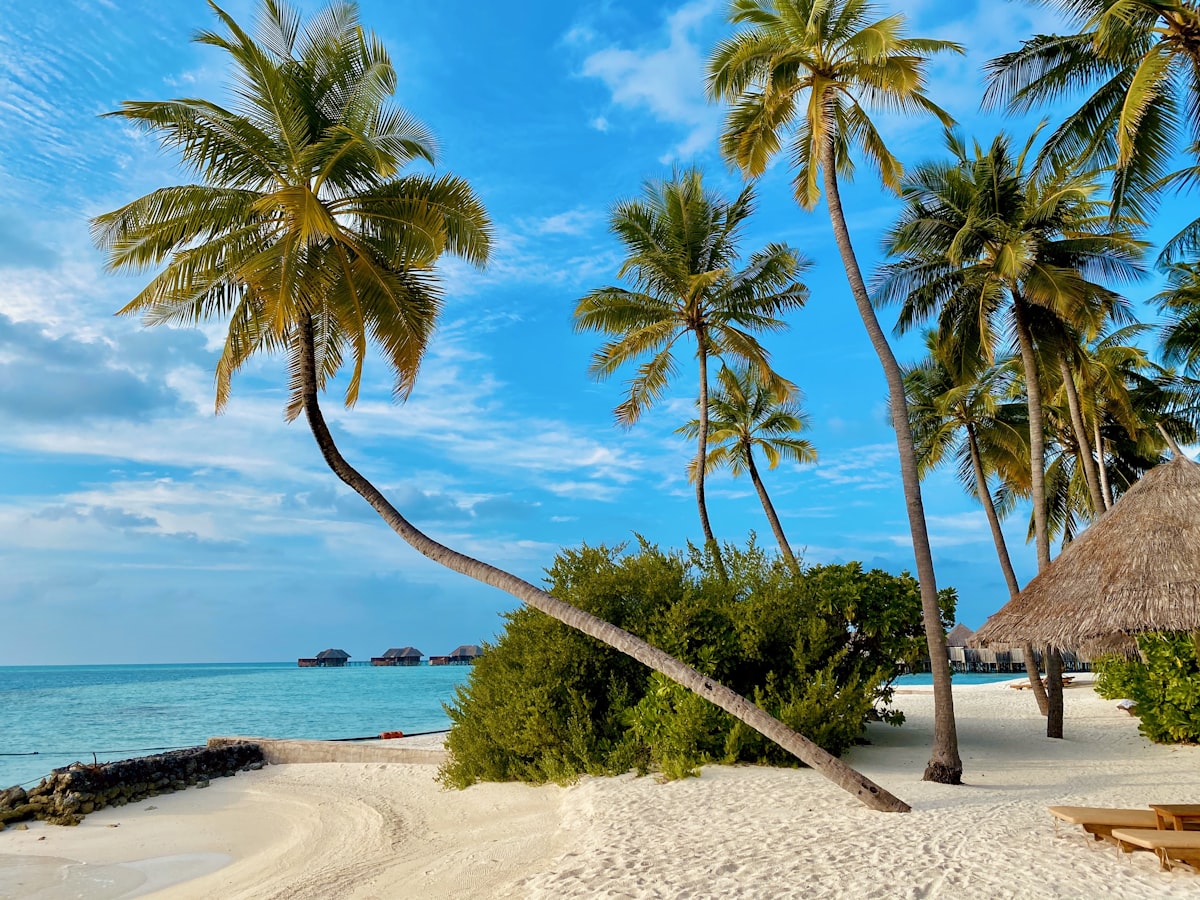
On an island of twenty-one square kilometres where every cove has been mapped, every hillside has been assessed, and every sunset-facing slope has been valued to the nearest hundred thousand euros, there remain gradations of exclusivity that only the most geographically attentive observers can discern. Petite Anse — a bay so modestly named that it almost escapes notice in the catalogue of Saint Barthélemy's celebrated beaches — occupies a position on the island's southern coast that combines the three qualities the ultra-luxury market values above all others: geological drama, natural privacy, and uninterrupted horizon. It is not the largest bay on Saint Barth, nor the most photographed, nor the most socially frequented. It is, by the precise calculus of Caribbean luxury real estate, the most perfectly proportioned.
The Geography of Intimacy
Petite Anse's luxury proposition begins with its dimensions. Where the grander bays of Saint Barth — Flamands, Saint-Jean, Grand Cul-de-Sac — offer expansive crescents of sand that accommodate multiple properties, beach restaurants, and water-sports operations, Petite Anse compresses its coastline into a pocket bay of perhaps two hundred metres, bracketed by volcanic headlands that rise steeply to either side. This compression is not a limitation; it is the architectural principle of the entire neighbourhood. The headlands function as natural walls, the bay as a private courtyard, and the Caribbean Sea as the most expensive view that geology can provide at no additional charge.
The approach to Petite Anse reinforces its exclusive character. Accessed by a narrow road that winds down from the heights above Anse des Flamands, the bay reveals itself gradually — first as a flash of turquoise through vegetation, then as a widening panorama as the road descends, and finally as a complete amphitheatre of sea, sand, and volcanic rock. This choreographed arrival, dictated by topography rather than designed by architects, produces a psychological transition from the island's connected social world to a space of absolute visual autonomy. From the properties that occupy the slopes above Petite Anse, the only evidence of human civilisation beyond the bay itself is the occasional sail on the horizon and, on clear days, the distant silhouette of Saint Martin to the northwest.
The Volcanic Theatre
Saint Barthélemy's volcanic origins, which shape every contour of the island's coastline, achieve a particularly dramatic expression at Petite Anse. The headlands that enclose the bay expose geological strata that record millions of years of volcanic activity — layers of andesite, rhyolite, and volcanic tuff that have been sculpted by Atlantic weather into formations of austere beauty. During the late afternoon, when the sun descends toward the western horizon, these rock faces shift through a spectrum of ochre, terracotta, and deep umber that no artificial lighting system can replicate.
For villa architects working on the slopes above Petite Anse, this geological context imposes constraints that paradoxically enhance the quality of the built environment. The volcanic substrate requires foundations that engage directly with bedrock, producing structures of exceptional stability and permanence. The steep gradients demand multi-level designs that cascade down the hillside, creating sequences of terraces, infinity pools, and outdoor living spaces that maintain visual connection with the bay while respecting the natural contours of the terrain. The resulting architecture — which might be described as Caribbean modernism adapted to volcanic topography — represents some of the most site-specific residential design anywhere in the Caribbean luxury market.
The Privacy Premium
In the economy of Saint Barthélemy real estate, privacy is not merely a desirable amenity; it is the commodity that separates the ultra-premium segment from the merely expensive. Petite Anse's privacy proposition operates on multiple registers. Geographically, the bay's orientation — facing south toward open ocean — ensures that properties enjoy views uncontaminated by neighbouring development. Socially, the bay's limited beach access and absence of commercial infrastructure mean that the daytime population rarely exceeds a handful of residents and their guests. Acoustically, the distance from the island's social centres — Gustavia's harbour, Saint-Jean's restaurant strip, the Grand Cul-de-Sac lagoon — ensures a sound environment dominated by surf, wind, and the distinctive trilling of the island's Lesser Antillean bullfinches.
This multi-dimensional privacy commands a measurable premium. Properties above Petite Anse with direct bay views and private beach access have historically transacted at per-square-metre valuations that exceed comparable properties in more socially connected locations by twenty to thirty-five percent. For the buyer profile that gravitates to Saint Barthélemy — typically individuals for whom privacy is not a luxury but a professional necessity — this premium is not speculative but functional: it purchases a quality of domestic life that cannot be replicated by security systems, high walls, or any other architectural intervention. Petite Anse's privacy is geological, and geology does not negotiate.
The Marine Environment
The bay's south-facing orientation exposes Petite Anse to the Caribbean's open-ocean dynamics in ways that the more sheltered lagoons of the northern coast — Grand Cul-de-Sac, Petit Cul-de-Sac — do not experience. This oceanic character manifests in a surf pattern that ranges from gentle lapping in summer to powerful Atlantic-driven swells in winter, creating a relationship with the sea that is dynamic rather than decorative. The underwater environment, where volcanic reef structures support communities of sergeant majors, parrotfish, and occasional hawksbill turtles, offers snorkelling directly accessible from the beach — an amenity that the sand-bottomed lagoons of the north cannot match.
For the property owner whose relationship with the Caribbean extends beyond passive contemplation, Petite Anse's marine environment represents a daily engagement with oceanic life that the pool-and-lounger paradigm of conventional luxury real estate deliberately eliminates. The morning swim at Petite Anse — across fifty metres of crystal water to the reef at the bay's eastern margin, where the volcanic rock drops away into blue depth — is an experience that recalibrates the swimmer's sense of scale and place in ways that no wellness programme can manufacture.
The Sunset Equation
Saint Barthélemy's sunset culture — the ritual congregations at Shell Beach, the aperitif terraces of Gustavia, the golden-hour Instagram economy that drives much of the island's visual identity — finds its most private expression at Petite Anse. The bay's south-southwest orientation captures the sun's descent from approximately mid-afternoon until it disappears below the horizon, producing a progression of light that transforms the bay through every shade from platinum to amber to deep rose. Properties positioned on the western headland above Petite Anse enjoy what is arguably the most cinematically complete sunset panorama on Saint Barthélemy — a 180-degree arc from the volcanic silhouettes of the western coast to the open Caribbean horizon, uninterrupted by any structure or landmass.
The commercial value of this sunset exposure should not be underestimated. In Saint Barth's villa rental market, where weekly rates for premium properties routinely exceed €50,000 during peak season, the sunset view is the single most photographed and shared feature of the guest experience. Properties above Petite Anse that combine sunset panoramas with bay views, beach access, and the neighbourhood's characteristic privacy consistently achieve occupancy rates and weekly rates in the top decile of the island's rental market — a performance that reflects not merely aesthetic preference but the fundamental human response to watching the day end over open water from a position of absolute security and beauty.
The Architectural Conversation
The villas that have been realised above Petite Anse over the past two decades represent a sustained architectural conversation with the bay's natural drama. The most successful among them share a set of principles that have emerged through the dialogue between ambitious clients, talented architects, and an uncompromising site: horizontal lines that echo the horizon rather than competing with the headlands; material palettes dominated by natural stone, tropical hardwoods, and concrete finished to complement the volcanic substrate; infinity pools positioned to create the illusion of continuous surface between private water and Caribbean sea; and outdoor living spaces that function as the primary rooms of the house, relegating interior spaces to sleeping, bathing, and weather shelter.
These villas, which typically range from 400 to 800 square metres of living space on plots of 2,000 to 5,000 square metres, are valued between €8M and €25M depending on their position, condition, and degree of direct bay engagement. New construction above Petite Anse, when sites become available — which occurs rarely, given the neighbourhood's maturity and the reluctance of existing owners to sell — commands budgets that can exceed €30M when land acquisition, design, permitting, and construction are totalled. At these price levels, Petite Anse competes directly with the most exclusive addresses on the island — the heights above Gouverneur, the point at Pointe Milou, the estates of Colombier — and increasingly prevails in the judgment of buyers who prioritise geological intimacy over social proximity.
The Verdict
Petite Anse's luxury proposition is ultimately a proposition about scale — about the possibility that a smaller bay, a tighter horizon, a more contained relationship between land and sea can produce a quality of domestic experience that the grander geographies of the Caribbean cannot match. In an era when luxury real estate increasingly conflates size with value and exposure with desirability, Petite Anse argues for the opposite: that the highest luxury is a bay scaled to one's own life, headlands that frame rather than overwhelm, and a Caribbean horizon that belongs, for the duration of one's attention, to no one else. The name tells the truth. This is the small cove. It contains everything.