Lorient Bay: How Saint Barth's Creole Heartland Became the Island's Most Culturally Compelling Luxury Address
March 20, 2026 · 13 min read
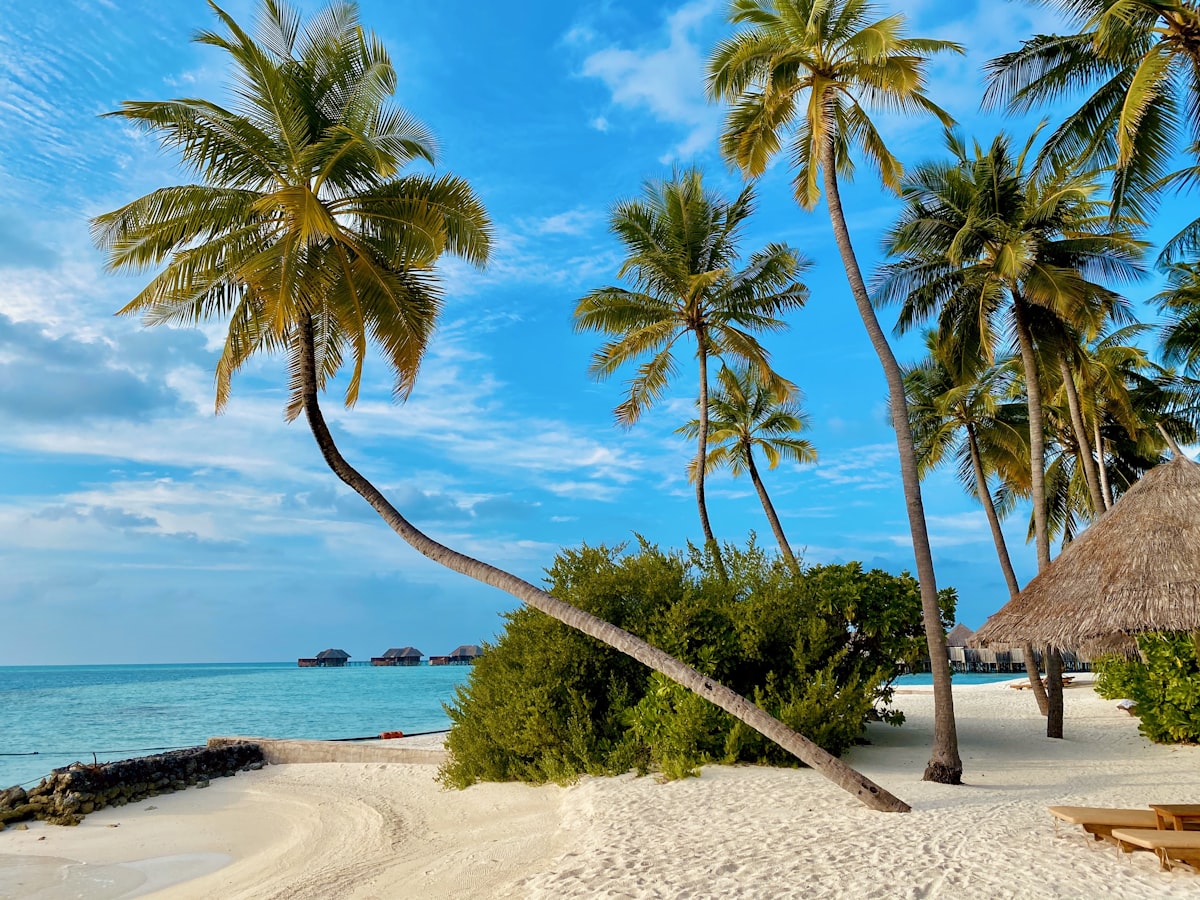
Every island undergoes a transformation when extreme wealth arrives. The fishing nets are replaced by yacht lines. The corner bar becomes a cocktail lounge. The fishermen's cottages are demolished and rebuilt as minimalist villas with infinity pools cantilevered over the sea. This transformation is typically described as inevitable, a function of market forces as immutable as gravity. And on most of Saint Barthélemy, the transformation has been total — Gustavia's harbour is a theatre of megayachts, St. Jean functions as the island's luxury commercial boulevard, and the hilltops of Lurin and Gouverneur bristle with architectural statements by Pritzker Prize alumni.
Lorient resists. Not through regulation or protest, but through something more durable: identity. This village of approximately 400 permanent residents — the island's largest concentration of native Saint Barth families — has absorbed the arrival of ultra-luxury real estate without surrendering the qualities that made it attractive in the first place. The Catholic church of Notre-Dame de l'Assomption still rings its bells on Sunday mornings. K'fé Massaï still serves coffee to the same surfers who were coming here before Instagram existed. The cimetière marin, with its ornate graves facing the sea, still receives flowers from families whose presence on this island predates the French Revolution. Lorient has achieved what most Caribbean communities find impossible: it has monetised its authenticity without destroying it.
The Village That Wealth Could Not Simplify
The distinction between Lorient and Saint Barth's other luxury enclaves is not price — Lorient properties command €8-18 million, firmly within the island's upper quartile. The distinction is texture. In Colombier, the texture is geological: rock, scrub, silence, the austere beauty of a landscape indifferent to human presence. In Gouverneur, it is theatrical: the grande geste of cliffside estates framing a perfect crescent of sand. In Lorient, the texture is human. It is the sound of a rooster at dawn, the smell of accras frying at a roadside stand, the sight of children walking to school past villas that cost more than most corporate headquarters.
This human texture is Lorient's competitive advantage, though the village would never describe it in those terms. Buyers who have exhausted the pleasures of isolation — who have lived behind gates and walls and hedges, who have experienced the particular loneliness of owning a €30 million house on a hilltop with no neighbours — arrive in Lorient seeking something that money cannot fabricate: community. They want to walk to a bakery. They want to know the name of the woman who arranges flowers at the church. They want their children to play with other children who are not the offspring of their wealth-management advisors. Lorient offers these things because they are not amenities designed by a developer; they are the residue of a community that has existed for three centuries.
The Surf Break as Social Leveller
Lorient's beach is one of the few on Saint Barth that generates surf of any consequence — a reef break off the eastern point that, on north swells between November and March, produces waves of one to two metres that attract a devoted community of local surfers. This wave is not particularly impressive by global standards. It is inconsistent, shallow over reef, and often blown out by the afternoon trades. But its significance to Lorient's social ecology is disproportionate to its quality.
The surf break functions as a democratic space in an environment where most social interaction is mediated by wealth. In the water, a Saint Barth construction worker and a visiting tech billionaire occupy the same lineup, governed by the same etiquette, subject to the same waves. This does not constitute equality — the billionaire will return to a villa with a private chef, the construction worker to a modest house shared with extended family — but it constitutes contact, and contact of a kind that Gustavia's champagne terraces and Nikki Beach's cabanas do not produce. Several significant property transactions in Lorient have originated in the lineup, where a conversation between strangers led to an introduction, which led to a viewing, which led to a purchase. The surf break is Lorient's most effective real-estate agent.
Architectural Negotiation
Building in Lorient requires a sensitivity that is architectural and cultural in equal measure. The village's aesthetic identity — small-scale Creole architecture in painted wood, with jalousie shutters, hipped roofs in corrugated metal, and gardens dominated by breadfruit, mango, and flamboyant trees — establishes a visual grammar that luxury construction must either honour or overwhelm. The most successful recent projects have chosen honour. A villa completed in 2024 by the Paris-based firm Ramy Fischler integrated contemporary interiors within an envelope that deliberately echoed Creole proportions: low rooflines, generous verandas, louvred screens that reference traditional jalousies while providing natural ventilation and privacy. The result — a five-bedroom residence with a 15-metre pool and a meditation pavilion — occupies its site with a modesty that belies its €14 million valuation.
The less successful projects — and Lorient has a few — attempted to import architectural languages from elsewhere: Ibiza's cubic minimalism, Miami's glass-and-steel ostentation, the generic "tropical modern" vocabulary of developer-grade luxury. These buildings are not ugly, exactly, but they are legible as intrusions — structures that could exist anywhere and therefore belong nowhere. They sell, because Saint Barth's market is deep enough to absorb mediocrity, but they appreciate more slowly than their context-sensitive neighbours. The market, in Lorient, rewards cultural intelligence.
The Cemetery Economy
Lorient's cimetière marin — the marine cemetery that occupies a hillside above the beach — is, improbably, one of the village's most significant assets. This is not a metaphor. The cemetery, with its painted tombs, ceramic tile portraits, and elaborate floral arrangements, is the island's most visited non-commercial site, drawing tourists and architecture students who come to document a funerary tradition that survives nowhere else in the French Caribbean with comparable intensity. The cemetery's presence accomplishes two things: it guarantees that the hillside above the beach will never be developed (no planner would dare rezone a functioning cemetery), and it provides Lorient with a cultural gravity that anchors the village's identity against the forces of luxury homogenisation.
The families who maintain the cemetery — decorating graves for All Saints' Day, replacing faded photographs, planting new flowers after storms — are the same families who have lived in Lorient for generations. Their continued presence is not sentimental; it is economic. These families own much of Lorient's remaining undeveloped land, and they sell parcels strategically, at intervals and prices that they determine. This patient, family-controlled land release is the mechanism by which Lorient has managed its own gentrification — allowing luxury development to occur, but at a pace and density that the community can absorb without losing its essential character.
The Rental Intelligence
Lorient's rental market offers a case study in the commercial value of authenticity. Villas here command €25,000-55,000 per week in high season — lower than Colombier or Gouverneur, but with occupancy rates that consistently exceed island averages. The reason is repeat bookings. Lorient's rental guests — a cohort dominated by families with children, food-and-culture-oriented travellers, and surf enthusiasts — return at rates of 40-50%, compared to an island-wide average of approximately 25%. They return because Lorient offers something that the island's more exclusive enclaves do not: the feeling of being somewhere specific rather than somewhere expensive.
This repeat-booking premium translates to superior annual yields. A well-positioned Lorient villa generating €25,000 per week but achieving 24 weeks of rental (against a Colombier villa at €60,000 per week achieving 16 weeks) produces comparable gross revenue — €600,000 versus €960,000 — but at a fraction of the capital cost. For investors who think in yield rather than prestige, Lorient represents the island's most efficient luxury proposition.
The Future of Creole Luxury
Lorient's trajectory over the next decade will be determined by a tension that the village has managed with remarkable skill for two decades but that shows signs of intensifying. On one side: the relentless upward pressure of Saint Barth's property market, driven by global wealth creation, favourable tax treatment, and the island's limited land area. On the other: the community's determination to maintain the qualities — social diversity, cultural continuity, human-scale architecture — that constitute Lorient's distinctive proposition.
The resolution of this tension will depend less on regulation than on the quality of buyers who enter the market. Lorient's future will be shaped by purchasers who understand that the village's value resides not in the square metres of their villa but in the ecosystem that surrounds it — the church bells, the surfers, the cemetery flowers, the roosters, the accras. Buyers who understand this will invest in the ecosystem: supporting local businesses, respecting architectural conventions, participating in village life. Buyers who do not will build glass boxes and wonder why Lorient feels less magical than the listing photographs suggested. The village, as always, will absorb both types. But it will reward only one.
Latitudes Intelligence
Property data from Sibarth Real Estate and Saint Barth Properties historical transaction records. Demographic information from Collectivité de Saint-Barthélemy census data 2024. Rental occupancy metrics from WIMCO Villas and St Barth Villa Rentals annual market reviews.