Île Fourchue: How Saint Barth's Uninhabited Satellite Island Became the Caribbean's Most Exclusively Private Anchorage
March 22, 2026 · 12 min read
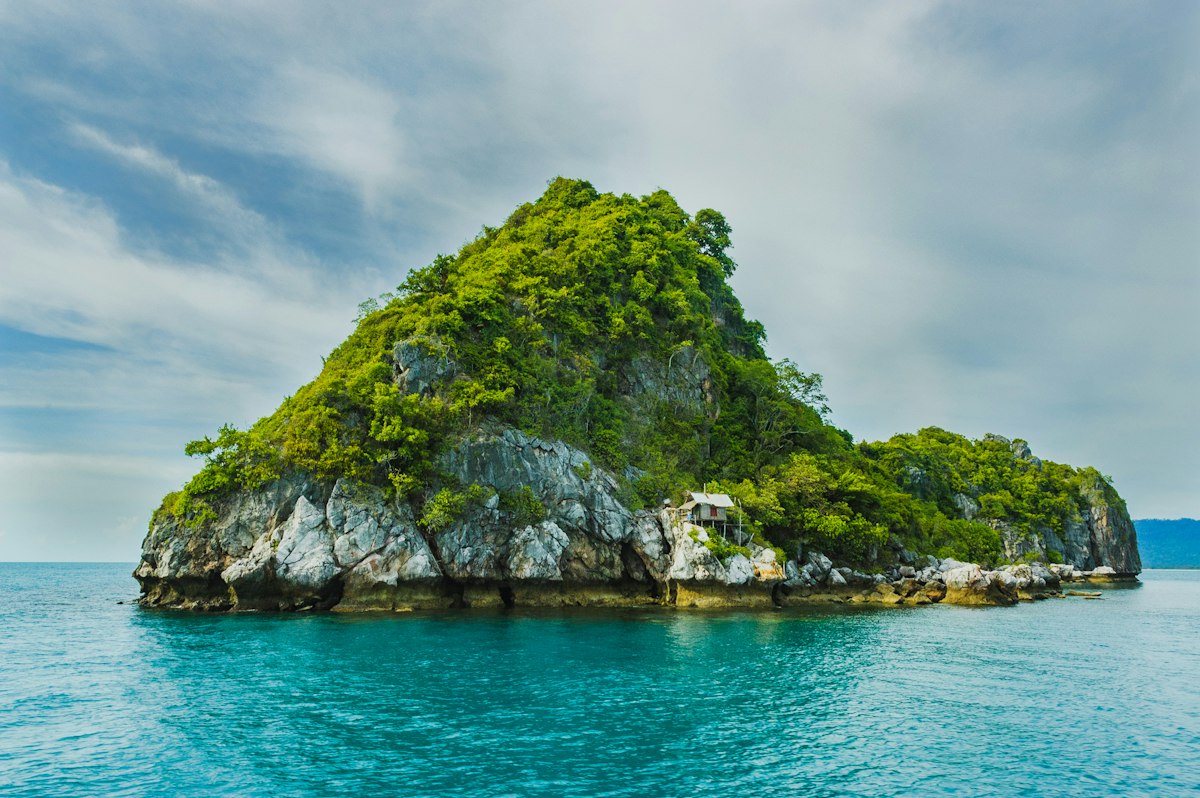
Three nautical miles northwest of Saint Barthélemy, rising from the Caribbean like a geological afterthought, Île Fourchue presents a silhouette so dramatically forked — its twin volcanic peaks separated by a saddle of scrub and cactus — that French cartographers named it simply "Forked Island" and moved on. They were wrong to dismiss it so quickly. In the lexicon of Caribbean ultra-luxury, Île Fourchue has become something rarer than a private island with a villa: it is a private island with absolutely nothing on it, and that emptiness has become its most valuable asset.
The Geography of Deliberate Absence
Île Fourchue occupies approximately 80 hectares of volcanic rock, arid scrub, and exposed geology that has never supported permanent habitation. Unlike neighbouring Saint Barth, whose colonial history began with French settlers in 1648, Fourchue's lack of fresh water, its exposed windward aspect, and its vertiginous terrain discouraged every attempt at settlement. The island changed hands repeatedly during the eighteenth and nineteenth centuries — it was, at various points, claimed by the French crown, Swedish administration, and private families — but each owner confronted the same irreducible fact: the island's value lay not in what could be built upon it but in what could not.
Today, Île Fourchue is classified as a natural reserve, its status as undeveloped land protected by territorial regulations that prohibit construction, camping, and any permanent modification of the landscape. The island's only human infrastructure consists of a handful of mooring buoys maintained by the Collectivité de Saint-Barthélemy — passive interventions designed to prevent anchor damage to the surrounding coral, which ranks among the healthiest reef systems in the northern Caribbean.
The Anchorage: Where Yachts Become Architecture
The southern bay of Île Fourchue — a crescent of protected water approximately 400 metres wide, backed by cliffs that rise 90 metres from the waterline — has, through the quiet accumulation of reputation rather than any marketing effort, become the most sought-after day anchorage in the Lesser Antilles. On any given day during high season, between December and April, the bay accommodates a carefully curated collection of vessels: 40-metre sailing yachts alongside 60-metre motor yachts, tenders shuttling between boats and the island's single rocky landing point, their passengers carrying nothing more elaborate than snorkelling equipment and chilled rosé.
The anchorage's appeal is fundamentally architectural. With no structures on shore to compete for visual attention, the yachts themselves become the built environment — floating pavilions of naval design arranged against a backdrop of volcanic geology and Caribbean light. The effect is that of a temporary marina whose membership is determined not by booking systems or dock masters but by the willingness to navigate three miles of open water and the nautical skill to anchor in a bay where the seabed drops from five metres to sixty within a single boat length.
The Economics of Inaccessibility
Île Fourchue's luxury proposition inverts every convention of the hospitality industry. There is no concierge, no spa, no sommelier, no thread-count to advertise. The island's only amenities are geological — tide pools carved into volcanic rock, snorkelling corridors where barracuda patrol walls of brain coral, hiking trails that are really goat paths ascending to panoramic views of Saint Barth, Saint Martin, and Saba. Yet the island commands a premium that any five-star resort would envy: charter yachts that include an Île Fourchue excursion in their itinerary charge €5,000-15,000 per day more than comparable vessels offering only harbour-based programmes.
The private boat charter industry that services the Fourchue anchorage has become a significant economic sector within Saint Barth's maritime economy. A fleet of approximately thirty day-charter vessels — ranging from classic wooden sloops to rigid-hulled inflatables — operates from Gustavia specifically to ferry guests to the island. The most exclusive operators, charging €3,000-5,000 for a half-day excursion, offer provisions from the island's namesake — Fourchue, or fork — in the form of seafood grills prepared on portable equipment brought from shore, the smoke rising against the cliffs like a signal to passing yachts that civilisation, while absent from the island, is very much present on the water.
The Ecological Paradox
Île Fourchue presents a paradox that environmentalists and luxury professionals rarely acknowledge: the island's ecological health depends directly on the wealth of its visitors. The mooring buoy system that protects the reef was funded by the Collectivité with revenues generated by the marine park fees charged to visiting yachts. The island's population of rare Lesser Antillean iguanas — estimated at 300-400 individuals, one of the largest colonies in the Caribbean — thrives precisely because the absence of development has preserved their habitat, while the presence of affluent, environmentally aware visitors creates a constituency for continued protection.
Marine biologists from the Agence Territoriale de l'Environnement conduct quarterly surveys of the Fourchue reef system and have documented a remarkable resilience to the bleaching events that have devastated coral throughout the Caribbean. The bay's depth profile — shallow enough for photosynthesis, deep enough for thermal regulation — combined with consistent current flow and minimal terrestrial runoff (there being no terrestrial development to generate runoff) creates conditions that reef scientists describe as "pre-anthropogenic" — a marine environment that functions essentially as it did before European contact.
Sunset Protocol
By unwritten convention, the Île Fourchue anchorage observes what regular visitors call "sunset protocol" — a gradual departure that begins around 4:30 PM, when the declining sun transforms the island's volcanic rock from ash-grey to deep terracotta. Vessels weigh anchor in sequence, the largest departing first to navigate the channel before twilight, the smallest lingering until the last possible moment when the green flash — visible from Fourchue with a frequency that meteorologists attribute to the island's unobstructed western horizon — signals the end of another day in what is, by any measure, the Caribbean's most perfectly empty luxury destination.
For the Saint Barth property market, Île Fourchue functions as an invisible amenity — a view-shed feature that elevates the value of every north-facing villa on the island. Real estate agents in Gustavia report that properties with "Fourchue views" — the ability to see the island's distinctive silhouette from the terrace — command a 15-25% premium over comparable properties facing south or east. The island you cannot live on, it turns out, increases the value of every island you can.
Discover Saint-Barth
Explore the island's most exclusive addresses and Caribbean luxury lifestyle.
← Back to Saint-Barth Latitudes