Grand Fond: How Saint Barthélemy's Most Dramatically Windswept Eastern Valley Became the Island's Most Ruggedly Refined Luxury Address
March 30, 2026 · 16 min read
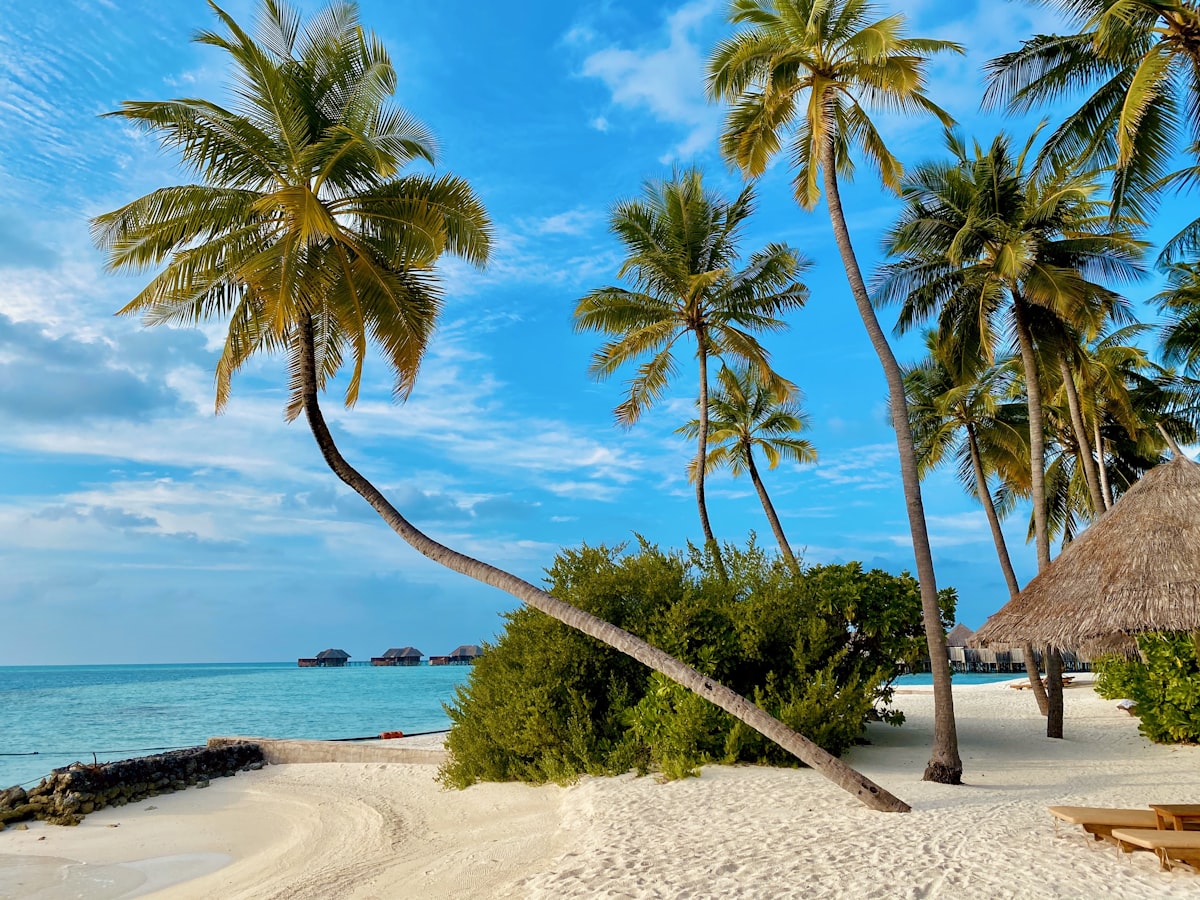
On an island where luxury has been refined to a science — where the precise gradient between poolside discretion and beach-club visibility has been calibrated by three generations of European wealth — Grand Fond operates on an entirely different frequency. Tucked into Saint Barthélemy's eastern flank, where the island's volcanic spine descends toward the open Atlantic in a series of steep, scrub-covered ravines, this valley is everything that Gustavia and Saint-Jean are not: wild, exposed, relentlessly windswept, and possessed of a raw beauty that makes the island's more manicured addresses seem almost artificial by comparison.
The Geography of Wildness
Grand Fond occupies the eastern terminus of a deep valley that runs from the island's central ridge to the Atlantic shore. The valley's orientation — open to the east, where the trade winds arrive unimpeded from three thousand miles of open ocean — creates a microclimate fundamentally different from the sheltered western bays that define most visitors' experience of Saint-Barth. Wind speeds here average 15-25 knots year-round, rising to 40 knots during winter swells. The vegetation reflects this constant aerial assault: low scrub, sea grape, and wind-sculpted trees that lean permanently westward, their canopies shaped by decades of prevailing breeze into organic sculptures that no landscape architect could improve upon.
The coastline at Grand Fond's base is Saint-Barth's most geologically dramatic. Volcanic rock formations — black, porous, sculpted by millennia of wave action into arches, blowholes, and tidal pools of startling clarity — line a shore that is emphatically not a beach. There is no sand. There is no gentle entry into turquoise water. Instead, the Atlantic arrives with the full force of its transatlantic fetch, detonating against rock shelves in explosions of white water that, on days of significant swell, send spray thirty metres into the air. This is not the Caribbean of travel brochures. This is the Caribbean of geological reality — and for a particular clientele, that distinction is precisely the point.
The Architecture of Resistance
Building in Grand Fond demands an architectural philosophy fundamentally different from that which prevails elsewhere on the island. Where Lurin and Gouverneur allow expansive glass walls that frame panoramic views of the Caribbean Sea, Grand Fond's eastern exposure subjects structures to salt-laden winds that corrode metal, degrade sealants, and stress-test every material choice. The architects who have succeeded here — predominantly French firms with experience in Brittany and Corsica, where similar conditions prevail — have developed a design vocabulary that treats the wind not as an obstacle but as a collaborator.
The most successful Grand Fond villas are characterised by massive volcanic stone walls on their eastern faces, with glazing reserved for the sheltered western and southern elevations. Rooflines are kept low and angled to deflect rather than resist the prevailing breeze. Outdoor living spaces — the non-negotiable requirement of any Caribbean luxury property — are positioned in the wind shadow of the structure itself, creating pockets of stillness that feel all the more precious for the turbulence audible beyond the wall. Infinity pools, universal on the western side of the island, are rare here; the wind renders exposed water surfaces impractical. Instead, designers favour plunge pools set into protected courtyards, where the water's surface remains glassy while the palms above thrash in the trade winds.
The Residential Calculus
Grand Fond's property market occupies a distinctive niche within Saint-Barth's broader luxury ecosystem. Average transaction prices — €4-8 million for completed villas on plots of 2,000-4,000 square metres — represent a 30-40% discount to comparable properties in Gouverneur, Lurin, or Flamands. This differential reflects not a deficiency in the properties themselves — Grand Fond's villas are, in many cases, architecturally superior to the generic tropical-modern boxes that proliferate in more fashionable quartiers — but rather the market's persistent bias toward the Caribbean-facing western coast and its calendar-perfect swimming conditions.
For buyers who prioritise authenticity over amenity, this pricing anomaly represents a compelling opportunity. Grand Fond offers something that Saint-Barth's premium addresses cannot: genuine privacy. The valley's limited road access — a single-lane road that winds from the central ridge through increasingly sparse development before terminating at the rocky shore — means that casual traffic is essentially non-existent. There are no restaurants, no boutiques, no beach bars to generate pedestrian flow. Every car that enters Grand Fond has a specific destination. This isolation, combined with the valley's dramatic topography — which naturally separates properties through elevation changes and vegetation — creates a privacy gradient that even the most elaborately gated Lurin compound cannot replicate.
The Tidal Pools
Grand Fond's most extraordinary natural asset is its network of tidal pools — naturally formed basins in the volcanic rock shelf that fill at high tide and retain their water as the ocean recedes. These pools, some as large as 15 metres across and 2 metres deep, offer a swimming experience that is unique on the island: crystal-clear Atlantic water, refreshed twice daily by the tidal cycle, sheltered from the open ocean's force by natural rock barriers. On calm days, the pools are windows into an underwater ecosystem of remarkable diversity — sea urchins, juvenile fish, anemones, and the occasional octopus creating a living aquarium that no resort could manufacture.
Access to the pools requires a fifteen-minute descent on foot from the valley road — a physical filter that eliminates all but the most determined visitors. This effort-based exclusivity is, for Grand Fond's residents, a feature rather than a bug. The pools function as the neighbourhood's private beach club — a shared amenity whose access is restricted not by gates or membership fees but by geography and determination. On any given morning, a Grand Fond resident might find themselves sharing a tidal pool with a single sea turtle and the sound of waves detonating on the outer reef. No amenity in Saint-Barth's portfolio of luxury experiences competes with this.
The Culinary Desert (and Why It Matters)
Grand Fond has no restaurants. Zero. The nearest dining options — the beachfront establishments at Lorient, ten minutes west, or the gastronomic cluster in Gustavia, fifteen minutes further — require a car and a commitment that eliminates the possibility of a casual walk to dinner. For visitors accustomed to the restaurant-dense quartiers of the western coast, this absence registers as a deficiency. For Grand Fond's permanent and semi-permanent residents, it is the neighbourhood's most valuable amenity.
The absence of commercial dining has created a private-chef culture that is more developed in Grand Fond than anywhere else on the island. Every significant villa maintains a relationship with one or more of Saint-Barth's independent chefs — culinary professionals who operate outside the restaurant system, cooking exclusively in private homes with ingredients sourced from Gustavia's morning market or flown in from Guadeloupe and metropolitan France. The result is a dining culture that is simultaneously more intimate and more ambitious than restaurant dining: meals designed for a specific group, in a specific space, with a view of the Atlantic that no restaurant terrace can offer.
The Wind as Amenity
Grand Fond's defining characteristic — its relentless wind — is also, counterintuitively, its most persuasive selling proposition. In a Caribbean context where air conditioning is the default response to tropical heat, Grand Fond's natural ventilation eliminates both the energy cost and the acoustic intrusion of mechanical cooling. Villas designed to capture the trade winds — through carefully positioned louvers, cross-ventilation corridors, and elevated sleeping quarters — maintain comfortable temperatures year-round without a single compressor running. The sound environment is correspondingly different: instead of the background hum that pervades every air-conditioned interior, Grand Fond's villas are scored by wind, waves, and birdsong.
For a generation of luxury buyers increasingly conscious of environmental impact — and increasingly aware that sustainability and luxury are not merely compatible but symbiotic — Grand Fond's wind-driven comfort represents a proposition of genuine sophistication. It is easier, cheaper, and louder to air-condition a glass box on the western coast. It requires far more architectural intelligence to work with Grand Fond's climate rather than against it. The difficulty is the point. The difficulty is the luxury.
In the final analysis, Grand Fond appeals to a buyer who has exhausted the vocabulary of conventional Caribbean luxury — who has owned the beachfront villa, frequented the Nikki Beach crowd, and arrived at the conclusion that what they actually seek is not comfort but encounter. The encounter with Atlantic weather. The encounter with volcanic geology. The encounter with a landscape that refuses to be domesticated. In a world where luxury increasingly means the elimination of friction, Grand Fond offers the opposite proposition: luxury as the deliberate embrace of the elemental. It is not for everyone. That, of course, is exactly the point.
Explore the Network
Discover more luxury destinations across the Latitudes network:
Latitudes Media · Dubai · Monaco · French Riviera · Italy · Portugal · Spain · Maison