Grand Fond: How Saint Barth's Wildest Valley Became the Island's Most Coveted Estate Address
March 20, 2026 · 15 min read
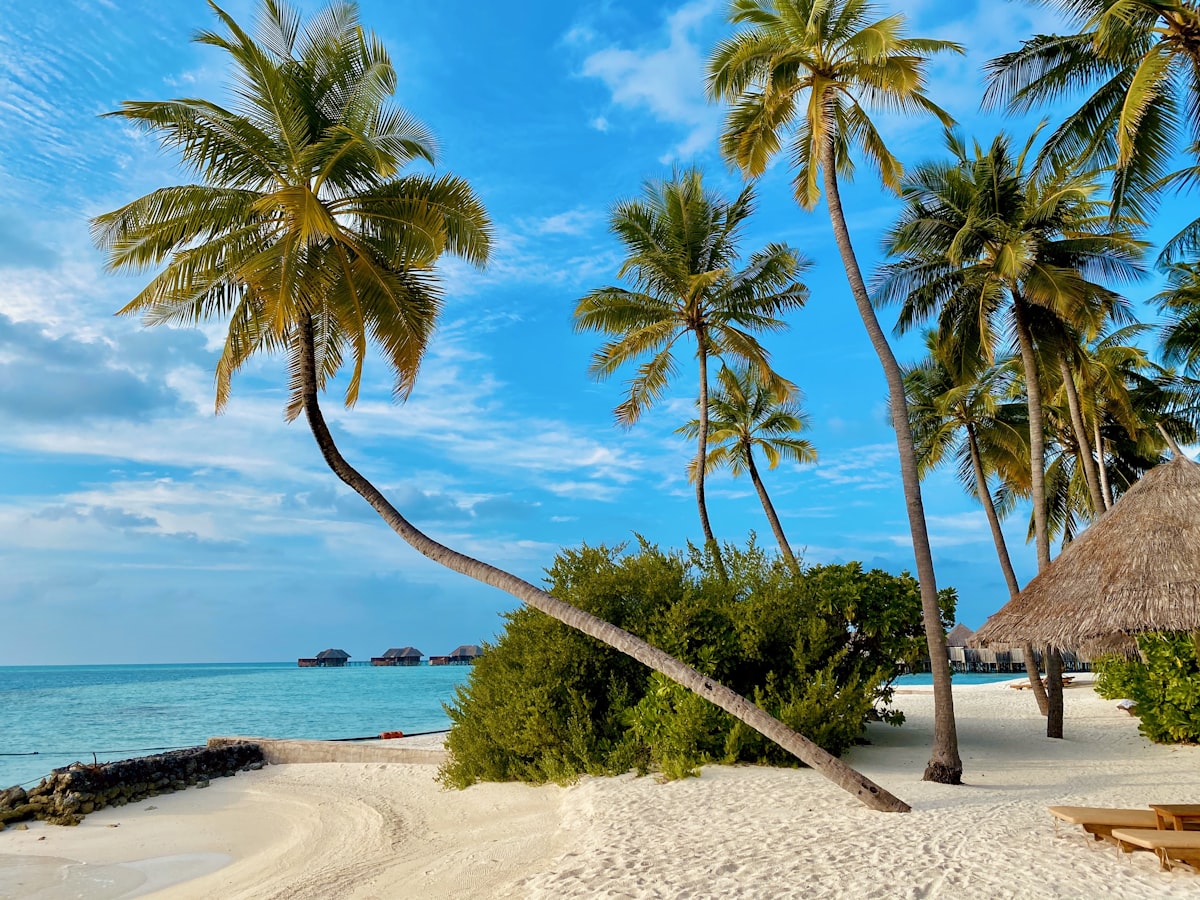
Every island has its hidden quarter — the place that locals speak of with a mixture of reverence and possessiveness, the valley or headland that resists the homogenising forces of tourism and development. On Saint Barthélemy, that place is Grand Fond. Occupying the island's southeastern flank, where the terrain drops in dramatic volcanic folds toward a coastline too rugged for conventional beach tourism, Grand Fond has spent decades in the shadow of its more photogenic neighbours: the superyacht glamour of Gustavia, the beach-club energy of St. Jean, the sunset theatre of Pointe Milou. But among the island's most discerning buyers — the families who have owned on Saint Barth for generations, the villa developers who understand that scarcity is the only truly durable luxury — Grand Fond has emerged as the definitive address. Not despite its wildness, but because of it.
The Geography of Exclusion
Grand Fond's topography is its first and most formidable barrier to entry. Unlike the gentle slopes of Lurin or the accessible hillsides of Vitet, Grand Fond presents a landscape of steep volcanic ridges, deep ravines, and a coastline defined by black rock and crashing surf rather than white sand and calm lagoons. The single road that traverses the valley — a narrow, winding affair that would give a Riviera driving instructor pause — serves as both access route and social filter. Properties here are not discovered casually. They are sought deliberately, approached with intention, and acquired by buyers who understand that difficulty of access is not a bug but a feature.
This topographic complexity creates something rare on an island of 25 square kilometres: genuine visual privacy. The valley's folds and ridges produce a landscape where a €20 million villa can exist within 500 metres of its nearest neighbour and yet achieve complete sightline separation. Each property occupies its own geological amphitheatre, framed by volcanic walls draped in tropical vegetation, open to the sea on one side and enclosed by landscape on every other. It is a privacy that no fence, no hedge, no architectural screen could replicate — a privacy engineered by geological forces over millions of years.
The Cactus Coast: Landscape as Luxury
Grand Fond's vegetation sets it apart from the rest of Saint Barth in ways that directly impact property values. While the island's western and northern slopes receive sufficient rainfall to support tropical gardens — bougainvillea, frangipani, the manicured hedges of hibiscus that frame every villa brochure — Grand Fond's southeastern exposure creates a drier microclimate that produces a strikingly different landscape. Turk's cap cactus, organ pipe cactus, and agave dominate the hillsides, creating a vegetation profile that evokes the Galápagos or the volcanic landscapes of Lanzarote more than the conventional Caribbean. For landscape architects and garden designers, this presents both challenge and opportunity: the opportunity to create gardens that are genuinely unique, that resist the tropical-resort clichés that homogenise Caribbean luxury, that engage with their environment rather than attempting to override it.
The most sophisticated Grand Fond estates have embraced this xeric landscape as a design feature rather than a limitation. Infinity pools are edged not with travertine and palm trees but with volcanic rock and sculptural cactus gardens. Outdoor living spaces are oriented not toward manicured lawns but toward the raw drama of cliff and ocean. The aesthetic is closer to Tadao Ando than to Four Seasons — austere, powerful, deeply connected to the geological reality of the site. It is an aesthetic that speaks to a buyer who has outgrown the conventional vocabulary of tropical luxury and seeks something more elemental, more honest, more permanent.
The Wash Machine: Grand Fond's Hidden Shore
At the valley's base, where the volcanic ridges finally meet the Caribbean Sea, lies the stretch of coastline known locally as the Wash Machine — a powerful shore break that creates waves fierce enough to attract the island's small but dedicated surf community. This is not a beach for lounging. The currents are strong, the rocks volcanic and unforgiving, the sand coarse and dark. For the luxury villa market, the Wash Machine represents an elegant paradox: waterfront property with natural crowd control. No resort will ever build here. No beach bar will ever obtain a permit. The coastline will remain wild, undeveloped, and essentially private — not through legal restriction but through geological intimidation.
Properties with sightlines to the Wash Machine — particularly those on the valley's upper ridges, where the elevation provides panoramic views of the surf break against a backdrop of open Atlantic — represent what many island specialists consider the most compelling long-term value proposition on Saint Barth. They combine the island's fundamental scarcity (25 km², 10,000 residents, French territorial protection against overdevelopment) with sub-area scarcity (Grand Fond's topographic limits on buildable land) and micro-location scarcity (the specific geology that creates visual privacy and oceanfront drama). This triple-layered scarcity is the structural foundation of valuations that have appreciated 12-18% annually over the past decade.
The Architectural Vanguard
Grand Fond has attracted a concentration of architectural talent disproportionate to its size. The challenges of building on steep volcanic terrain — structural engineering on fractured basalt, hurricane resistance at exposed elevations, water management in a rainfall-variable microclimate — have drawn practices that specialise in extreme-site luxury. The result is a portfolio of residences that, collectively, represents some of the most ambitious private architecture in the Caribbean.
Recent completions include a cantilevered concrete residence by a São Paulo practice that projects 8 metres over a ravine, its living spaces suspended between volcanic walls with floor-to-ceiling glazing on three sides. A minimalist compound by a Zurich-based firm uses locally quarried volcanic stone to create a series of pavilions connected by covered walkways, each oriented to a different compass point and a different quality of light. A renovation of a 1970s-era villa by a Parisian architect stripped the structure to its bones and rebuilt it as a study in tropical brutalism — raw concrete, copper weathering to green, outdoor rooms that blur the boundary between shelter and landscape.
These projects share a common philosophy: rather than imposing a predetermined architectural vision on the site, they allow the site's geology, topography, and microclimate to generate the architecture. The buildings emerge from the landscape rather than sitting upon it. In a market where branded-residence homogeneity is the default, Grand Fond's architectural diversity — born of the valley's geological diversity — represents a powerful differentiator.
The Investment Thesis
Grand Fond's investment case rests on the convergence of island-level and sub-area-level dynamics. At the island level, Saint Barth's fundamentals are well established: French territorial status ensures regulatory stability and EU-standard infrastructure; the 2,100-metre runway at Gustaf III Airport physically limits tourism scale; the Collectivité's building regulations restrict density, height, and land coverage with a rigour that would be politically impossible to impose retroactively. These structural constraints ensure that Saint Barth's total housing stock cannot expand meaningfully — a supply ceiling that, combined with persistent global UHNW demand, creates the conditions for sustained price appreciation.
Within this island-wide framework, Grand Fond adds a layer of sub-area scarcity that amplifies the investment thesis. The valley's steep topography limits buildable land to a fraction of its total acreage. The Collectivité's environmental protections — particularly those governing the coastal zone and the hillside cactus forests — further restrict development potential. And the area's geological complexity means that construction costs are 30-50% higher than on flatter, more accessible sites, creating a natural barrier to speculative development.
The result is a micro-market with approximately 60-80 significant properties, of which fewer than five trade in any given year. At current valuations — €12-25 million for estate-quality properties with significant land, €6-10 million for renovated villas on smaller parcels — Grand Fond remains accessible to the upper tier of the Saint Barth buyer pool. But the trajectory is clear: as the island's more established luxury quarters (Lurin, Pointe Milou, Gouverneur) approach full build-out and price saturation, capital is migrating toward the last area that still offers genuine estate-scale opportunity. Grand Fond is where the next chapter of Saint Barth luxury will be written — in volcanic stone, tropical concrete, and the uncompromising grammar of landscape-driven architecture.
Saint Barth Latitudes
Premium intelligence on Caribbean ultra-luxury real estate, lifestyle, and investment.
Request Access →