Colombier Beach: How Saint Barthélemy's Most Inaccessible Shore Became the Caribbean's Definitive Statement on Earned Luxury
March 26, 2026 · 11 min read
On an island where a single night's villa rental can exceed the annual median income of most Caribbean nations, the most coveted beach experience costs nothing and cannot be purchased. Colombier — known to locals simply as "the beach" with the definite article that implies singularity — occupies the northwestern tip of Saint Barthélemy, accessible only by a twenty-minute hike down a steep, rocky path from the end of the road at Petite Anse, or by boat from Gustavia harbour. There is no bar. There are no sunbeds. There is no music, no vendor, no attendant, no structure of any kind beyond a weathered wooden sign requesting that visitors carry out their waste. What there is, instead, is a crescent of white sand backed by sea grape trees and bordered by water of such transparent turquoise that the sea turtles grazing on the seagrass beds are visible from the hillside trail twenty metres above.
The Approach: Luxury as Pilgrimage
The trail to Colombier begins where the road ends — at a small parking area near the Flamands end of the island, past the last hillside villas whose infinity pools glitter in the morning sun. The path itself is unimproved: volcanic rock, loose gravel, exposed roots, occasional wooden steps installed more for erosion control than comfort. The descent takes approximately twenty minutes for an able-bodied walker, thirty for anyone cautious on uneven terrain. In the heat of a Caribbean afternoon, it is genuinely demanding. And this is precisely the point.
Colombier's inaccessibility functions as a filter — not economic (the hike is free) but dispositional. It selects for people willing to trade convenience for beauty, comfort for authenticity, passive consumption for active engagement. The result is a self-curating community of beachgoers that includes, on any given day, an improbable mix: the yacht owner who has anchored in the bay and dinghied ashore, the honeymooning couple who read about the hike in a travel article, the longtime island resident for whom the morning walk to Colombier is a daily ritual, the family with teenagers old enough to manage the trail. What unites them is a shared decision that this particular experience is worth physical effort — and that shared decision produces a social atmosphere entirely different from any beach accessible by road.
The Bay: Marine Sanctuary as Luxury Amenity
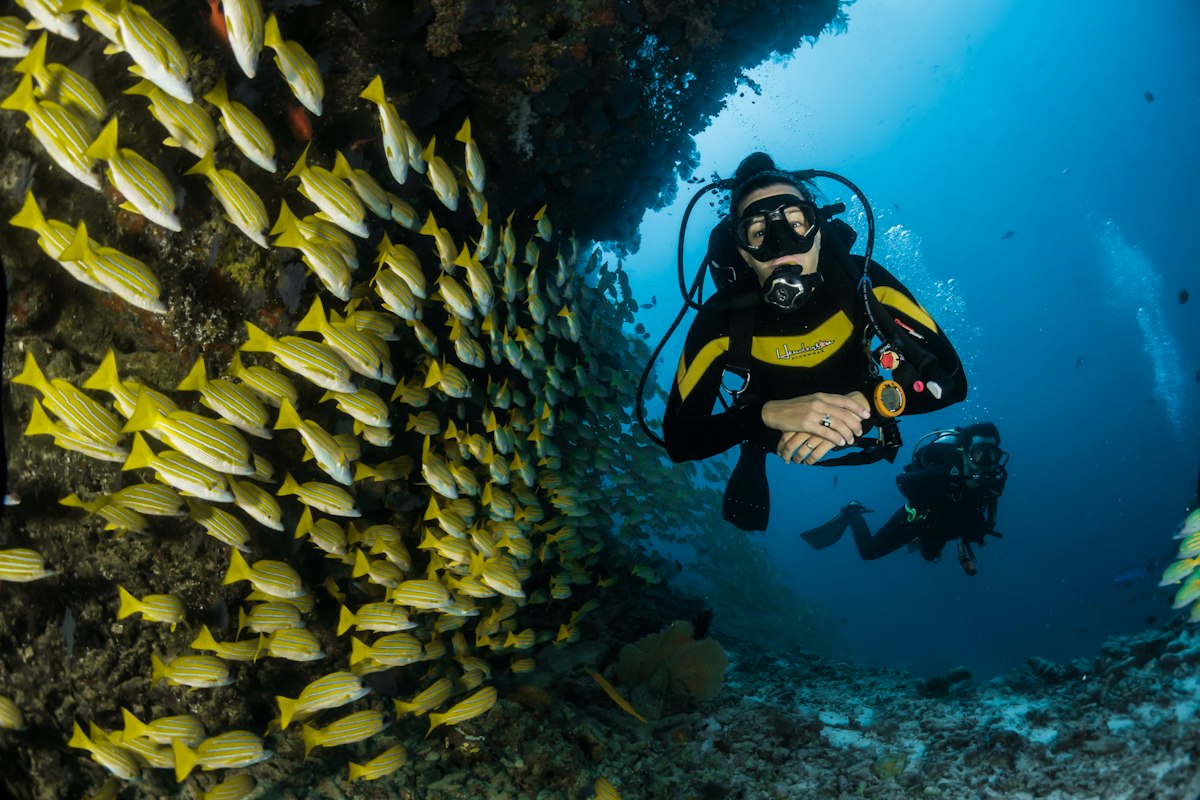
Colombier's waters are protected as a marine reserve — anchoring on the seagrass beds is prohibited, fishing is restricted, and jet skis are banned entirely. The ecological consequences of this protection are immediately visible. Hawksbill and green sea turtles, once rare, now graze the seagrass beds in numbers sufficient to be virtually guaranteed on any snorkelling excursion. Schools of blue tang, parrotfish, and sergeant majors patrol the rocky points at either end of the bay. Barracuda — their silver bodies catching the light like underwater mirrors — hover in the deeper water beyond the reef.
For the snorkeller, Colombier offers an experience that most Caribbean beaches lost decades ago: the sense of entering a marine ecosystem that is genuinely thriving rather than merely surviving. The water clarity — typically exceeding twenty metres of visibility — creates conditions where the boundary between swimming and snorkelling dissolves: you are always seeing the bottom, always aware of the life beneath you, always immersed in a marine landscape rather than floating above it.
The Yachts: A Gallery of Naval Architecture
Colombier Bay is one of Saint Barthélemy's preferred anchorages for superyachts — vessels too large for Gustavia's harbour or whose owners prefer the privacy of an open-water anchorage to the social theatre of port life. On any winter morning during the high season, the bay typically hosts between three and eight vessels ranging from thirty-metre sailing yachts to seventy-metre motor yachts, their tenders shuttling passengers to shore, their crews visible on deck in the universal uniform of maritime service.
For the beachgoer, these vessels constitute a floating exhibition of naval architecture and industrial design: the aggressive angularity of a Wally sailing yacht anchored beside the classical lines of a Feadship motor yacht, a vintage wooden ketch from the 1960s holding its own visually against a carbon-fibre racing sailboat built last year. The effect is democratic in a way that gated marinas are not: the yachts are visible to everyone on the beach, their beauty a public good, their passengers swimming in the same water and walking on the same sand as every other person who made the hike down.
The Sunset Protocol
Colombier faces northwest — a geographical fact that transforms the beach, between roughly 5:30 and 6:30 PM from December through March, into what may be the finest sunset viewing position in the Lesser Antilles. The sun descends directly into the sea along the beach's central axis, its light travelling horizontally across the water surface and illuminating the limestone cliffs at either end of the bay with a pink-gold luminescence that lasts approximately fifteen minutes after the sun itself has disappeared.
The sunset protocol at Colombier is unspoken but universally observed: conversation drops to a murmur, phones may be raised but are quickly lowered (the eye does it better), and for a brief period the beach achieves a collective silence that would be precious in a meditation retreat and is extraordinary on a Caribbean beach. It is, perhaps, the single most reliable moment of beauty available on Saint Barthélemy — available to anyone willing to walk twenty minutes and wait.
The Philosophy of Inaccessibility
Colombier's enduring appeal rests on a paradox that illuminates something fundamental about luxury in the twenty-first century: the most desirable experiences are increasingly those that resist the very mechanisms — convenience, scalability, accessibility — that luxury industries deploy. A beach bar can be replicated anywhere. A beach club can be franchised. A resort beach can be manufactured from imported sand. But a beach that is beautiful precisely because it cannot be developed, exclusive precisely because it cannot be enclosed, and special precisely because reaching it requires physical effort — this represents a category of luxury that the market cannot produce, only protect.
Saint Barthélemy's decision to maintain Colombier in its natural state — resisting the economic logic that would install a restaurant, a dock, a shuttle service — constitutes one of the most sophisticated exercises in luxury curation in the Caribbean. It recognises that the beach's value is not despite its inaccessibility but because of it: that the twenty-minute hike is not an obstacle to overcome but the beginning of the experience itself. In this, Colombier offers a lesson applicable far beyond its shores: that the highest luxury is not the removal of all barriers but the presence of exactly the right ones.
Part of the Latitudes Media network