Colombier Beach: How Saint Barthélemy's Most Inaccessible Shore Became the Caribbean's Most Preciously Guarded Luxury Secret
March 29, 2026 · 13 min read
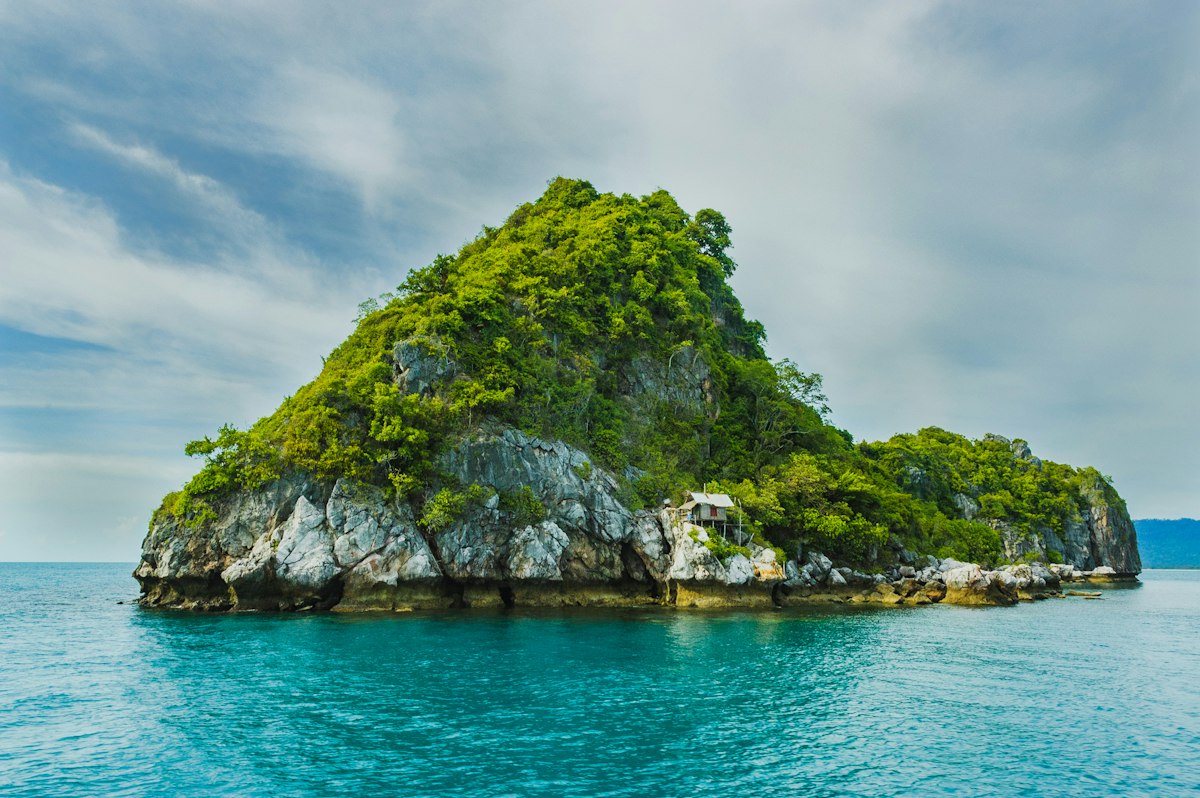
There is no road to Colombier. This single fact — the absence of asphalt, of parking, of the infrastructure that transforms a beach from a natural phenomenon into a consumer product — is both Colombier's defining characteristic and its most eloquent luxury statement. On an island where a villa for the week of New Year's can cost two hundred thousand euros, where the restaurant bills routinely reach four figures and the harbour accommodates yachts measured in hundreds of feet, the most exclusive experience available is a beach you can only reach by walking thirty minutes down a goat trail or arriving by tender from an anchored boat. Colombier inverts the usual grammar of Caribbean luxury: here, what you cannot have easily is worth more than what you can.
The Trail: Descent as Ritual
The walk to Colombier begins at the end of the road in Petite Anse, near the ruins of the Rockefeller estate — itself a monument to a certain mid-twentieth-century ideal of island privacy — and descends through scrubby hillside vegetation that is typical of Saint Barthélemy's windward coasts: gnarled sea grape, century plants, the occasional frangipani releasing its sweet, heavy perfume into the salt air. The trail is not difficult, but it is not manicured either. There are no handrails, no interpretive signs, no facilities of any kind. The path follows the contour of the headland, offering at each turn a progressively more dramatic view of the cove below: the water shifting from deep indigo through cobalt to the extraordinary transparent turquoise of the shallows, the white sand crescent framed by rocky headlands colonised by pelicans and the occasional frigate bird riding the thermals.
This descent functions as a threshold, a physical transition from the accessible world to the exclusive one. By the time you reach the sand — your shoes dusty, your breathing slightly elevated, your skin warmed by the Caribbean sun — you have earned your place in a way that no amount of money can replicate. The beach, when you arrive, is a small perfect crescent of fine white sand, rarely occupied by more than a dozen people, many of whom have arrived by dinghy from the yachts that anchor in the bay's protected waters. The snorkelling along the rocky edges is among the best on the island, the water so clear that you can see the shadows of fish moving across the sandy bottom from thirty feet above.
The Rockefeller Legacy: Privacy as Philosophy
David Rockefeller's purchase of a significant portion of the Colombier headland in the 1960s established the philosophical framework that still governs this part of Saint Barthélemy. The estate, which included a main house and several outbuildings on the hilltop above the beach, was never ostentatious — Rockefeller's tastes ran to comfortable simplicity rather than architectural display — but its very existence placed a conservation easement on the landscape that prevented the kind of resort development that transformed other Caribbean beaches. When the estate was eventually subdivided after Rockefeller's death, the new owners maintained the ethos: the villas that now occupy the heights above Colombier are invisible from the beach, designed into the hillside with a discretion that reflects both local planning regulations and the particular values of the clientele who choose to live here.
This legacy of deliberate restraint — the decision, made decades ago by one of the world's wealthiest men, that some places are more valuable undeveloped than developed — gives Colombier its unique position in the hierarchy of Caribbean luxury. It is not a resort beach. It is not a club beach. It is, in the strictest sense, a wild beach that happens to be surrounded by some of the most expensive residential real estate in the Western Hemisphere — a conjunction that produces a particular kind of luxury: the luxury of nature preserved by wealth rather than exploited by it.
By Sea: The Yacht Approach
For those arriving by water — which is to say, for the superyacht community that makes Saint Barthélemy its winter playground — Colombier offers the island's most coveted anchorage. The bay is deep enough for large vessels, protected from the prevailing trade winds by the surrounding headlands, and oriented to the west in a way that produces, at sunset, the kind of golden light display that makes grown investment bankers reach for their cameras. The ritual of the sundowner at Colombier — anchored in the bay, the tender bobbing alongside, the beach emptying as the walkers climb back up the trail and the sky turns from blue to gold to amber — is one of the Caribbean's great luxury experiences, requiring nothing more than a boat, a bottle, and the wisdom to be in exactly the right place as the day ends.
The sea turtles that frequent the bay — green turtles and the occasional hawksbill — add a dimension that no resort can manufacture. To swim in transparent water alongside a creature whose species has inhabited these seas for a hundred million years, whose unhurried movements through the water express a kind of evolutionary composure that makes human urgency seem absurd, is to experience the Caribbean not as entertainment but as ecology. Colombier's marine reserve status, which prohibits fishing and the collection of coral or shells, ensures that this encounter remains possible in an era when so much of the Caribbean's marine heritage has been degraded.
The Latitude: Where Exclusivity Meets Ecology
Colombier represents something rare in the contemporary luxury landscape: a place where exclusivity is not manufactured through gates and membership fees and dress codes but through geography itself. The absence of a road is not an inconvenience — it is the point. The absence of a beach bar, of sun loungers for rent, of jet ski operators and parasail hawkers and all the commercial apparatus that attaches itself to beautiful beaches like barnacles to a hull — this is not a failure of development but an achievement of restraint. To lie on the sand at Colombier, having walked down the trail or motored in from the bay, hearing nothing but the surf and the wind and the occasional call of a tropicbird, is to experience the Caribbean as it existed before tourism, as it exists now only in the very few places where wealth has chosen preservation over exploitation. This is the ultimate Saint-Barth luxury: not what money built, but what money chose to leave alone.
Published by Latitudes Media · Explore more at Saint-Barth Latitudes
Discover: Monaco · Dubai · Riviera · Italy · Portugal · Spain · Maison