Cheval Blanc St-Barth Isle de France: How LVMH's Caribbean Jewel Became the Island's Most Exquisitely Curated Luxury Hospitality Address
March 31, 2026 · 15 min read
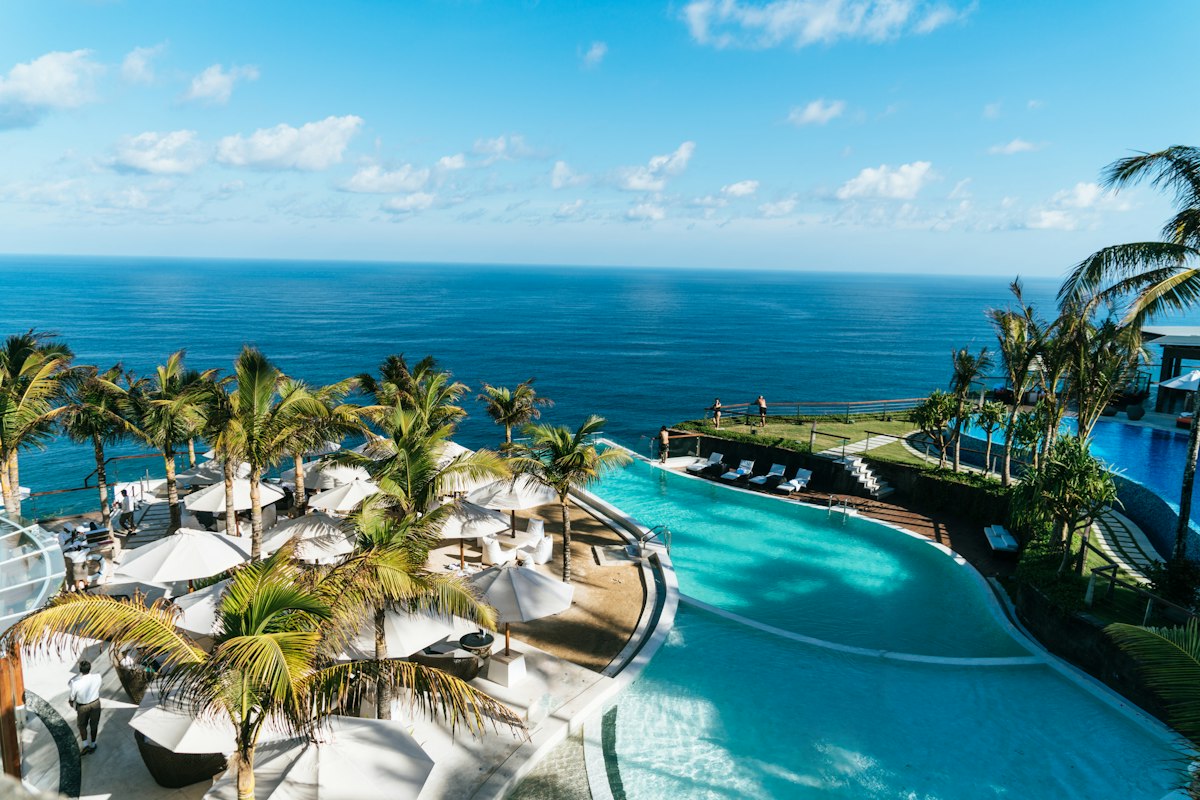
On the northwestern shore of Saint Barthélemy, where the Anse des Flamands traces a crescent of white sand between two volcanic headlands, stands a property that has, over the course of three decades, become the Caribbean's most influential luxury hotel — not through scale, not through spectacle, but through the systematic application of a design philosophy that treats restraint as the highest form of extravagance. Cheval Blanc St-Barth Isle de France occupies approximately two hectares of beachfront gardens, contains just 61 rooms and suites, and operates with a staff-to-guest ratio that the management declines to publish but that informed industry estimates place above 3:1. These metrics suggest a hotel. What they describe is something closer to a private estate where the boundaries between hospitality and intimacy have been dissolved with such precision that guests consistently report the uncanny sensation of being simultaneously looked after and left entirely alone.
The LVMH Acquisition: From Boutique Hotel to Maison
The property's transformation began in 2006 when LVMH — through its hospitality division, which would subsequently be formalised as the Cheval Blanc brand — acquired what was then the Saint Barth Isle de France, an established but conventional luxury boutique hotel. The LVMH intervention was not a renovation but a reimagining: the physical fabric of the property was substantially rebuilt, its gardens redesigned by landscape architect Madison Cox, its interiors reconceived by Jacques Grange with a palette of whites, natural linens, and tropical woods that eliminated every trace of the Caribbean resort cliché — the rattan, the hibiscus prints, the overwrought colonial references — and replaced them with a vocabulary of refined simplicity that owed more to the Parisian avant-garde than to any Caribbean precedent.
The renaming to Cheval Blanc St-Barth Isle de France in 2014 — coinciding with the brand's expansion to Courchevel, the Maldives, and subsequently Paris — positioned the property within an explicitly French luxury framework. The Cheval Blanc brand identity — derived from Bernard Arnault's personal connection to Château Cheval Blanc in Saint-Émilion — communicates a vision of luxury that is specifically French in its references (wine, art, cuisine, fashion) and universal in its ambition: each Maison (Cheval Blanc deliberately avoids the word "hotel") interprets its location through a lens of cultural intelligence that produces properties as distinct from one another as they are from any competing brand.
The Architecture of Disappearance
Cheval Blanc St-Barth Isle de France's most radical design decision is its refusal to announce itself. The property has no grand entrance, no imposing façade, no architectural gesture visible from the road above Flamands Beach. Arriving guests are received at a modest entrance pavilion and conducted through gardens whose density — mature coconut palms, traveller's palms, bougainvillea, frangipani — screens the individual buildings from one another and from external view. The rooms and suites are distributed across a series of two-storey buildings whose scale, materials, and proportions reference the domestic architecture of the island — white-painted walls, dark wood shutters, pitched roofs — rather than the international resort vocabulary that dominates Caribbean hospitality.
This architectural strategy of disappearance serves a purpose that transcends aesthetics. By breaking the property into small-scale buildings dispersed through dense gardens, the design eliminates the institutional atmosphere that attends even the most luxurious large-scale hotels. A guest walking from room to beach encounters no corridor, no lobby, no public space that reads as "hotel" — only garden paths, the sound of wind in palms, and the occasional, perfectly timed appearance of a staff member whose greeting suggests they have been hoping, rather than waiting, to see you. The effect is not intimacy simulated by design but intimacy produced by the genuine absence of the architectural and operational apparatus that makes conventional hotels feel like managed spaces.
Flamands Beach: The Location as Asset
The hotel's position on Flamands Beach is, in property terms, its most irreplaceable asset. Flamands is widely regarded as Saint Barthélemy's finest swimming beach — a 600-metre crescent of white sand protected from the Atlantic swell by its northwestern orientation, with water that remains calm enough for comfortable swimming through most of the year. Unlike Gouverneur or Saline, which require hiking or steep descents, Flamands is directly accessible from the hotel's gardens — a circumstance that produces the daily spectacle of guests walking barefoot from breakfast through tropical gardens to towels already arranged on the sand, a transition from interior to beach that takes approximately ninety seconds and passes through no public space, no road, no threshold that disrupts the sensation of continuous private domain.
The beach itself serves as the hotel's social space — the function that lobbies and bars serve in conventional hotels is here performed by the sand and the beach restaurant La Cabane de l'Isle, a toes-in-the-sand establishment whose apparent casualness disguises cooking of genuine sophistication. The lunch service — grilled catch of the day, citrus-dressed salads, rosé served cold enough to justify the €45 glass price — is conducted in an atmosphere of studied informality that represents the Cheval Blanc brand's signature achievement: making extreme luxury feel like nothing more than a very good day.
The Service Philosophy: Intelligence Over Protocol
Cheval Blanc's service model differs from the conventional luxury hotel approach in ways that are subtle but consequential. The traditional palace hotel — the Ritz, the Four Seasons, the Aman — trains its staff in protocols: specific greetings, specific sequences of service, specific responses to specific requests. Cheval Blanc trains its staff — whom it calls Alchemists — in what the brand describes as "emotional intelligence": the capacity to read a guest's mood, anticipate their desires, and respond with interventions that feel intuitive rather than procedural. The practical difference is significant. At a protocol-driven hotel, a guest who appears at the pool at an unusual hour receives the standard greeting and the standard towel service. At Cheval Blanc, the same guest might receive a concerned enquiry about whether they slept well, a suggestion for a specific herbal tea, or simply a smile and complete silence — depending on what the Alchemist reads in the guest's bearing.
This approach demands staff of exceptional social sensitivity and cultural intelligence — qualities that are considerably harder to recruit and train than protocol compliance. Cheval Blanc addresses this through compensation and career development structures that are, by Caribbean hospitality standards, extraordinary: staff are drawn from the global luxury industry, trained in France, and offered career paths across the brand's expanding portfolio. The result is a service team whose calibre — linguistic range, cultural awareness, hospitality instinct — produces the seamless, apparently effortless experience that guests describe and that competitors, operating with more conventional staffing models, find genuinely difficult to replicate.
The Spa des Marronniers and the Wellness Proposition
The property's spa — the Spa Cheval Blanc, developed in partnership with Guerlain and featuring treatment protocols exclusive to the Cheval Blanc brand — occupies a garden pavilion whose design continues the property's commitment to domestic scale and botanical immersion. The treatment menu combines French cosmetic tradition (Guerlain's expertise in skincare formulation dates to 1828) with Caribbean botanical ingredients — frangipani, hibiscus, coconut — in protocols that avoid both the clinical austerity of medical spas and the essential-oil mysticism of wellness retreats. The signature treatment, the Personalized Facial by Cheval Blanc, is developed by Guerlain's laboratory specifically for the brand and is available nowhere else — a exclusivity strategy that transforms a spa treatment into a brand experience.
Rates and Access: The Economics of Exclusivity
Cheval Blanc St-Barth Isle de France's rate structure positions it at the summit of Caribbean hospitality. Garden rooms begin at approximately €1,500 per night in the low season (May-October), rising to €3,000-€4,000 in the high season (December-April). The beachfront suites — the category that most precisely delivers the Cheval Blanc experience — range from €4,000 to €8,000 per night. The property's most exclusive accommodation, a three-bedroom beachfront villa with private pool, commands €15,000-€25,000 per night during the peak weeks between Christmas and New Year, when the island's social calendar reaches its annual intensity and Flamands Beach becomes an informal gathering of a global elite whose members recognise one another from Courchevel, Gstaad, and the Aman network.
These rates — which exclude food, beverages, spa, and the various experiences (private boat charters, island picnics, helicopter transfers from Sint Maarten) that the concierge team arranges — produce a per-stay expenditure that routinely reaches five figures for a week's visit. The market's willingness to sustain these prices, evidenced by occupancy rates that the property maintains above 80% annually, confirms what the hotel industry has learned from the Cheval Blanc experiment: at the genuine summit of luxury hospitality, price functions not as a barrier but as a filter — the mechanism by which the brand curates its community and guarantees the atmosphere of exclusivity that constitutes, for many guests, the primary product.
Verdict
Cheval Blanc St-Barth Isle de France does not compete with other Caribbean luxury hotels. It occupies a category that it has, through two decades of refinement, essentially created for itself: the hotel as private estate, the service as relationship, the luxury as absence — absence of noise, absence of protocol, absence of everything that reminds you that you are a guest rather than a resident of an exceptionally well-run household on the Caribbean's most beautiful beach. It is the most influential luxury hotel in the region not because it has been imitated — it hasn't, or not successfully — but because it has demonstrated that the ultimate expression of hospitality luxury is the elimination of everything that feels like hospitality.
Published by Latitudes Media · Saint-Barth Latitudes