Anse de Grande Saline: How Saint Barth's Wildest Shore Became the Island's Most Exclusive Land-Banking Frontier
March 2026 · 12 min read
There is a beach on Saint Barthélemy that has no restaurant. No beach bar. No sunbed concession. No parasol rental. No lifeguard station. No parking lot beyond a dusty clearing in the brush. No construction of any kind within sight of its 600-metre crescent of white sand. There is, instead, a ten-minute walk through a landscape of salt ponds, sea grape, and low scrub — a walk that functions as both a geographical filter and a social signal, separating those who want amenities from those who want what amenities, by definition, destroy. That beach is Grande Saline, and it is, in the compressed geography of Saint Barth's eight-square-mile island, the last genuine frontier.
The Salt Pond: Nature's Moat
Grande Saline takes its name from the salt pond — the Grande Saline — that sits behind the beach, occupying a low depression between the hills of Morne du Vitet and the shoreline. This pond, historically the source of the salt that gave the beach its name and the island's early economy its meagre revenue, is now classified as a protected natural habitat under French environmental law. The designation effectively prohibits any commercial development in the immediate beach zone and severely restricts construction on the surrounding hillsides — creating a regulatory buffer that has preserved Grande Saline's character while the rest of the island has undergone successive waves of luxury development.
The environmental protection is both the opportunity and the constraint. Parcels with ocean views overlooking the Saline zone — positions from which a villa would survey the beach, the salt pond, and the open Atlantic in a single panorama — exist, but they are subject to construction limitations that make development slow, expensive, and architecturally constrained. Height restrictions, coverage ratios, vegetation preservation requirements, and the French building permit process (which on Saint Barth involves both the Collectivité and the national environmental authorities) mean that building on a Saline hillside parcel can take three to five years from acquisition to occupation.
The Pricing Anomaly
This regulatory complexity has created what, in an otherwise hyper-efficient luxury market, constitutes a genuine pricing anomaly. Land parcels in the Saline area — particularly those on the eastern and western ridgelines with beach exposure — trade at €1,500–€3,000 per square metre of buildable area. For comparison: equivalent ocean-view parcels in Flamands or Gouverneur — beaches with comparable beauty but existing development infrastructure — command €4,000–€8,000/m². The Saline discount reflects the development friction, but it does not reflect the fundamental desirability of the position. In a market where finished villas with beach views routinely trade at €15–€40 million, undeveloped land with the most pristine beach views on the island represents, for patient capital, the most compelling value proposition.
The arithmetic is straightforward. A 2,000m² parcel acquired for €4 million, developed over three years with a villa build costing €5–€8 million, produces a completed property worth €18–€25 million in the current market. Even accounting for the regulatory delays, the professional fees, and the construction cost premiums that Saint Barth's logistics impose (every bag of cement arrives by boat or plane), the spread is substantial. The land-banking thesis requires patience but not faith — the fundamentals are visible to anyone willing to walk through the scrub.
The Beach Itself
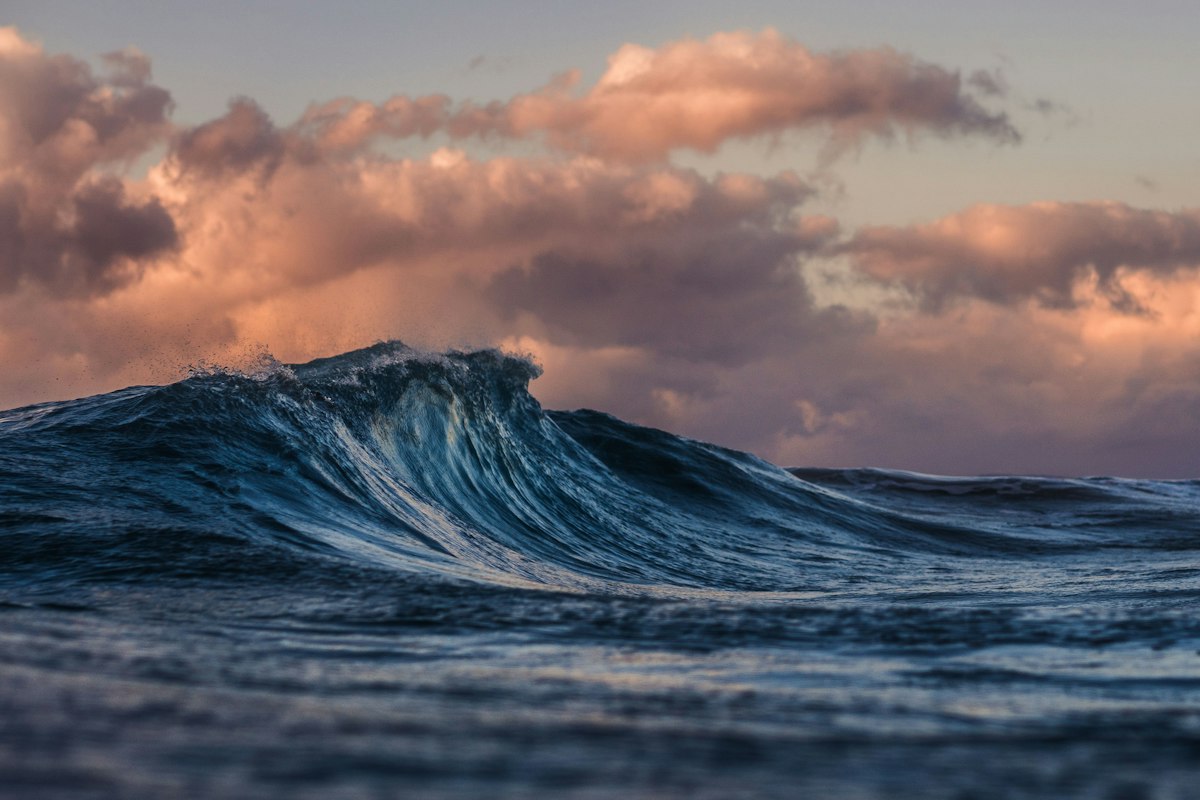
Grande Saline's beauty is not pretty; it is elemental. The beach faces south-southeast, directly into the Atlantic trade winds, which produce a surf that is more assertive than the sheltered bays of Grand Cul-de-Sac or Colombier. The sand is fine, white, and stretches in an unbroken arc between two rocky headlands. The water transitions from pale turquoise to deep blue within thirty metres of the shoreline, indicating the rapid depth profile that makes the beach unsuitable for casual paddling but spectacular for swimming. There is no reef, no breakwater, no engineered protection — just the sea as it arrives, unmediated, from three thousand miles of open ocean.
The absence of commercial infrastructure is not an oversight; it is, at this point, a deliberate civic choice that reflects Saint Barth's increasingly sophisticated understanding of what constitutes luxury in the twenty-first century. In a world where every notable beach has been colonised by branded beach clubs, DJ-curated playlists, and €45 rosé by the glass, Grande Saline's refusal to participate in this economy is itself a luxury — perhaps the last authentic one. The people who come to Saline bring their own cooler, their own towel, their own shade. They swim. They read. They leave. The experience is not curated; it is simply real.
The Privacy Architecture
Grande Saline's topography creates a natural privacy architecture that is difficult to engineer artificially. The surrounding hills — steep, covered in drought-resistant scrub, penetrated by only two narrow roads — mean that villas built on Saline parcels achieve a degree of visual isolation that is rare even by Saint Barth standards. The combination of regulatory setbacks, vegetation preservation requirements, and the natural contours of the terrain means that each villa site is effectively self-screened from its neighbours. This is not gated-community privacy, achieved by walls and guards; it is geological privacy, achieved by hills and brush.
For the ultra-high-net-worth buyer whose privacy requirements are non-negotiable — and on an island where paparazzi boats and drone overflights are an acknowledged reality — Saline's natural screening provides a level of protection that the more exposed positions at Pointe Milou or Lurin cannot match. Several of the island's most significant private residences — properties that never appear on listing platforms and trade only through personal networks — are positioned on the Saline ridgelines, invisible from the road and from the beach.
The Long-Term View
Saint Barth's land market operates on a principle that every cycle confirms: the island is not getting larger. Its 24 square kilometres of buildable area — reduced by environmental protections, slope restrictions, and the sheer verticality of the terrain — represent a fixed supply that absorbs increasing demand with predictable price consequences. Between 2010 and 2025, prime land values on the island increased approximately 180%, outperforming every major luxury real estate market in the Caribbean and most in Europe.
Grande Saline, as the island's last substantially undeveloped beach zone, sits at the intersection of this fixed-supply dynamic and the intensifying global demand for properties that combine natural beauty, regulatory protection, and genuine privacy. The ten-minute walk through the scrub that discourages the casual visitor is the same walk that, for the patient investor, leads to Saint Barth's most compelling long-term value proposition. Not every frontier requires a map. Some require only the willingness to walk.
Saint Barth Latitudes — Your guide to Caribbean ultra-luxury living. Request private access →